CNV launches Rainbow Tick journey on Transgender Day of Visibility

CNV launches Rainbow Tick journey

Today, on the International Day of Transgender Visibility, CNV has officially launched our journey towards Rainbow Tick accreditation.
31 March 2026

On Tuesday 31 March, the Centre for Non-violence (CNV) proudly marked two significant milestones: the official launch of our Rainbow Tick Accreditation journey, and recognition of Transgender Day of Visibility. Transgender Day of Visibility is an annual international celebration of trans pride and awareness, recognising transgender, gender diverse and non-binary experiences and achievements.

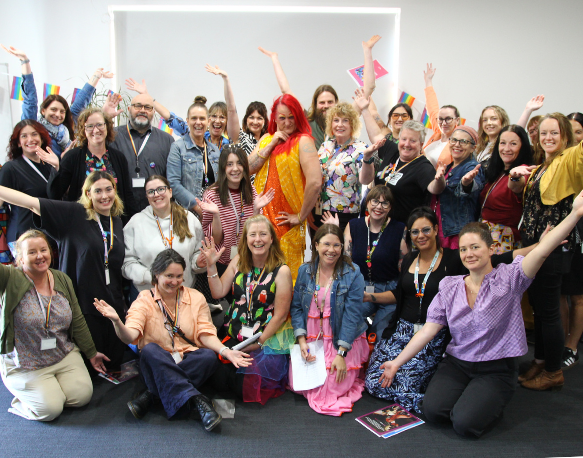
CNV hosted an internal event with staff and guest speaker StarLady from Zoe Belle Gender Collective, a local trans and gender diverse, advocacy led organisation. The event marked the beginning of our formal commitment to deepening safe, affirming, and inclusive practice for LGBTIQ+ clients, staff, and stakeholders across all areas of our work.

Rainbow Tick is a nationally recognised accreditation framework that supports health and human service organisations to demonstrate they are culturally safe, inclusive, and affirming for LGBTIQ+ communities. This includes the people who access our services, our partners and external stakeholders, and our staff.

We recognise that LGBTIQ+ communities experience disproportionately poorer health outcomes, as well as higher rates of intimate partner, sexual, and family violence, and ongoing discrimination. As a feminist, value s led organisation, undertaking Rainbow Tick Accreditation aligns strongly with our commitment to challenging systemic barriers and affirming the identities, dignity, and rights of marginalised communities.

Our Diversity and Inclusion Statement affirms that:

“CNV is an inclusive organisation, which ensures cultural safety, diversity, social justice, inclusion and equity is reflected in all we do.”

Commencing our Rainbow Tick journey is a visible and accountable action toward fulfilling this commitment.

This work has been strongly supported by CNV staff over several years, and we are committed to progressing the accreditation process respectfully, inclusively, and with clear purpose. We look forward to continuing this journey alongside LGBTIQ+ communities, advocates, and allies, as we strengthen our services and organisational culture.

Starlady wearing bright orange colours speaking in front of rainbow flags

International Women’s Day 2026

You can’t fix what ain’t broke:

The justice and legal system is working exactly as intended. This International Women’s Day, ‘Balancing the scales’ is about recognising that the scales were always intended to favour white men and demanding that transformative change is the only way forward.
8 March 2026

This International Women’s Day, we are calling on legal and justice systems to truly listen and respond to the lived experiences of victim survivors of family and sexual violence. These systems must undertake the necessary work to balance the scales so that women and children can safely and effectively seek justice and accountability.

Despite hard‑fought progress — including the Victorian Government’s recent decision to remove character references for people convicted of violent crimes after years of advocacy by survivors — the barriers to justice for women and children remain deeply entrenched. Women and girls still face extraordinary hurdles to being believed, let alone supported to pursue justice and accountability for the harm they have experienced.[1]

A crucial first step is reframing how we describe systemic abuse and sytems of oppression that cause harm. Phrases such as “falling through the cracks” obscure the reality of the barriers and inequalities experienced. They imply that the system works as intended, if only victim-survivors could navigate it correctly. But how can that be true when the very systems they turn to for protection were built in ways that deny fair and equitable access for women and girls?

Let’s be honest: no one “falls through the cracks.” The cracks are part of the design.

Deeply embedded biases, systemic oppression, and racism cannot be remedied with short-term fixes. Ensuring fair, inclusive, and accessible justice for every woman and girl requires confronting the uncomfortable truth that these systems were built to uphold the rights of men, predominantly cis, white men. They were constructed on a foundation of colonial oppression — and the consequences of that legacy are profound.

We see this most devastatingly for First Nations women and children. National data shows the over representation of Aboriginal and Torres Strait Islander women with one in three experiencing family and/or sexual violence at the hands of an intimate partner. First Nations women are also more likely to be mis-identified as the primary aggressor in the very systems purported to protect women from harm. This is despite the evidence: First Nations women are 34 times more likely to be hospitalised and 11 times more likely to die from violence than non-Indigenous women in Australia.[2] Family violence is also driving the rapidly increasing incarceration of First Nations women and is a leading cause of child removal into out of home care.[3]

These harms are not isolated incidents; they are part of a longstanding pattern of violence and systemic discrimination that has shaped First Nations experience since colonisation.

It remains true that the police force, the legal system and the judiciary are not specifically designed to deal with violence against women and children.[4]

Victim survivors’ attempts to seek safety and accountability are shaped by these broader forces of gender inequality, racism, and systemic bias. Engagement with the policing and legal system is all too often met with skepticism, delegitimisation, and disbelief — and the data reflects this troubling reality.[5]

A major 2025 Australian Law Reform Commission inquiry found that only 8% of women who are sexually assaulted report to police.[6] Of those reports, up to 85% never result in a charge, and even fewer proceed to court. Survivors frequently described their experience with police and courts as more traumatic than the violence itself, citing disbelief, poor communication, and re‑traumatisation during the process.

Last financial year, the vast majority of family violence incidents attended by police did not result in immediate protection for victim survivors or a Family Violence Safety Notice (FVSN).[7] In Greater Bendigo, more than 91% of incidents did not result in immediate protective action by police .[8] Increased police powers to apply immediate protection through FVSN, provides a stronger justice response and immediate safety — yet they are not being used.[9]

When this data is cross‑analysed with the type of violence reported, a pattern emerges: risk is too often unrecognised when physical or sexual violence is not present. Emotional and verbal abuse — along with often invisible tactics are patterns of coercive control and the strongest predictor of lethality in family violence homicides — making up more than 70% of police ‑attended incidents.[10]

Similarly, when victim-survivors themselves apply for Family Violence Intervention Orders (FVIOs), fewer than half are successfully granted, compared with just over 80% when police make the application.[11] This raises critical questions not only about why victim survivors are disbelieved when they seek protection, but also why perpetrators are believed and what the threshold for risk is — especially in a context where policy and legislation clearly identify family violence as a gendered crime.[12]

Systems harm extends far beyond policing and judicial responses to family and sexual violence. It is often realised through weaponisation by the perpetrator through what is known as ‘systems abuse’ — another tactic of coercive control. It is the deliberate misuse of government systems such as Child Support, Child Protection, and Family Law to intimidate, threaten, and harm victim-survivors.[13] It is pervasive, particularly within the Family Court where the legal system continues to disbelieve women and validate abusers.[14]

Each year, around 22,000 families navigate the Federal Circuit and Family Court system for parenting and property matters. In 2022–23, more than 84% of cases involved allegations of family violence, including risks to children.[15] Yet the Family Court continues to assert that it is not part of a family violence response — even as it routinely sidelines the voices of children, young people, and mothers, including in cases involving allegations of child abuse and child sexual abuse.[16]

Research by Death J et al. (2019) highlights that the Family Court has a troubling pattern of characterising mothers as vindictive or malicious when they raise concerns about abuse, rather than recognising potential harm or risk to children.[17]

There can be no justice where inequality persists. And there can be no accountability where systems abuse is enabled — or indeed replicated — by the system itself.

To balance the scales, we must first dismantle systems of inequality and oppression.

A transformed legal and justice system must recognise the equality and rights to justice and accountability of all people. It must prevent harm earlier and hold those who use violence accountable. Transformation is not only necessary — it is entirely possible.

It begins by believing women.

This International Women’s Day, we echo the call of ANROWS CEO, Tessa Boyd‑Caine:

“Inequality is built into systems […] it can be dismantled.”


Let’s get to work.


[1] See for example: Reeves E, Fitz-Gibbon K, Meyer S and Walklate S 2023. ‘Incredible Women: Legal Systems Abuse, Coercive Control and the Credibility of Victim-Survivors’, Violence Against Women, pp. 1-22

[2] Safe and Equal 2025. ‘Supporting Aboriginal and Torres Strait Islander People’. Available from: https://safeandequal.org.au/working-in-family-violence/tailored-inclusive-support/aboriginal-and-torres-strait-islander-people/#:~:text=3%20in%205%20Aboriginal%20and,by%20a%20male%20intimate%20partner. [Accessed: 5 February]

[3][3] See: Australian Human Rights Commission 2022. Wiyi Yani U Thangani (Women’s Voices): First Nations Women’s Safety Policy Forum Outcomes Report’, November 2022.

[4] See for example: National Plan to End Violence Against Women and Children 2022-2032. Available from: National Plan to End Violence against Women and Children 2022-2032 [accessed: 5 March 2026]

[5] Reeves E, Fitz-Gibbon K, Meyer S and Walklate S 2023. ‘Incredible Women: Legal Systems Abuse, Coercive Control and the Credibility of Victim-Survivors’, Violence Against Women, p. 2

[6] Australian Government 2025. ‘Safe, Informed, Supported: Reforming Justice Responses to Sexual Violence, Australian Law Reform Commission, January. Available from: alrc.gov.au/wp-content/uploads/2025/02/JRSV-Final-Report-Book-for-Web-final-20250211.pdf [accessed: 5 March 2026]

[7] For further information visit: Victorian Government 2026. ‘Family Violence Dashboard’. Available from: https://www.crimestatistics.vic.gov.au/family-violence-data/family-violence-dashboard [accessed: 4 March 2026]

[8] Victorian Government 2026. ‘Incident Details 2024-2025: Greater Bendigo’, available from: https://www.crimestatistics.vic.gov.au/family-violence-data/family-violence-dashboard [accessed: 4 March 2026]

[9] Victorian Government 2026. ‘Family Violence Safety Notices’, Victoria Legal Aid, 19 February. Available from: https://www.legalaid.vic.gov.au/family-violence-safety-notices [Accessed: 4 March 2026]

[10] Victorian Government 2026. ‘Incident Details 2024-2025: Greater Bendigo’, available from: https://www.crimestatistics.vic.gov.au/family-violence-data/family-violence-dashboard [accessed: 4 March 2026]

[11] Victorian Government 2026. ‘Family Violence Intervention Orders’, available from: https://www.crimestatistics.vic.gov.au/family-violence-data/family-violence-dashboard [Accessed: 4 March 2026]

[12] Reeves E, Fitz-Gibbon K, Meyer S and Walklate S 2023. ‘Incredible Women: Legal Systems Abuse, Coercive Control and the Credibility of Victim-Survivors’, Violence Against Women, p. 2

[13] DV Alert 2025. ‘Understanding Systems Abuse’, 25 August. Available from: https://www.dvalert.org.au/about/news-blog/understanding-systems-abuse#:~:text=Following%20the%20National%20Cabinet%20meeting,manipulated%20to%20further%20harm%20someone. [Accessed: 5 February 2026]

[14] Reeves E, Fitz-Gibbon K, Meyer S and Walklate S 2023. ‘Incredible Women: Legal Systems Abuse, Coercive Control and the Credibility of Victim-Survivors’, Violence Against Women, pp. 1-22

[15] Australian Government 2025. ‘Legal Systems’, Australian Institute of Health and Welfare. Available from: https://www.aihw.gov.au/family-domestic-and-sexual-violence/responses-and-outcomes/legal-systems#:~:text=Family%20courts,property%20orders%20in%202022%E2%80%9323.&text=A%20Notice%20of%20Child%20Abuse,the%20proceedings%20(FCFCOA%202024). [Accessed: 5 February 2026]

[16] Death J, Ferguson C and Burgess K 2019. ‘Parental alienation, coaching and the best interests of the child: Allegations of child sexual abuse in the Family Court of Australia’, in Child Abuse and Neglect, Vol.94. Available from: https://doi.org/10.1016/j.chiabu.2019.104045Get rights and content [Accessed: 5 February 2026]

[17] Ibid.

Submission to the UN Human Rights Office

Submission to the UN Human Rights Office

Guidelines on addressing multiple and intersecting forms of discrimination against women and girls with disabilities in law, policy and practice.
29 October 2025

The Centre for Non-Violence and Women with Disabilities Victoria recently welcomed the opportunity to provide written input to the United Nation’s Human Rights Office of the High Commissioner’s draft guidelines on addressing multiple and intersectional forms of discrimination against women and girls with disabilities.

This was an opportunity for our organisations to highlight the lived experiences of women, girls and gender-diverse people with disabilities living in Victoria, particularly the experiences of living in regional and rural settings and advocate for long-term meaningful change that challenges discriminatory practices that further exacerbate harm and pathways to equality.

Intersectional factors increase risk of harm and discrimination for women, girls and gender diverse people with disability. Multiple intersecting factors compound individual, community and systemic discrimination and oppression.  Our submission spoke at length to the impacts of family violence on women with disabilities, including the intersecting discrimination of finding safe and secure housing and access to justice and healthcare.

Sign up to our newsletter.

Receive our latest news, including sector resources and events, and hear how we're supporting our community.

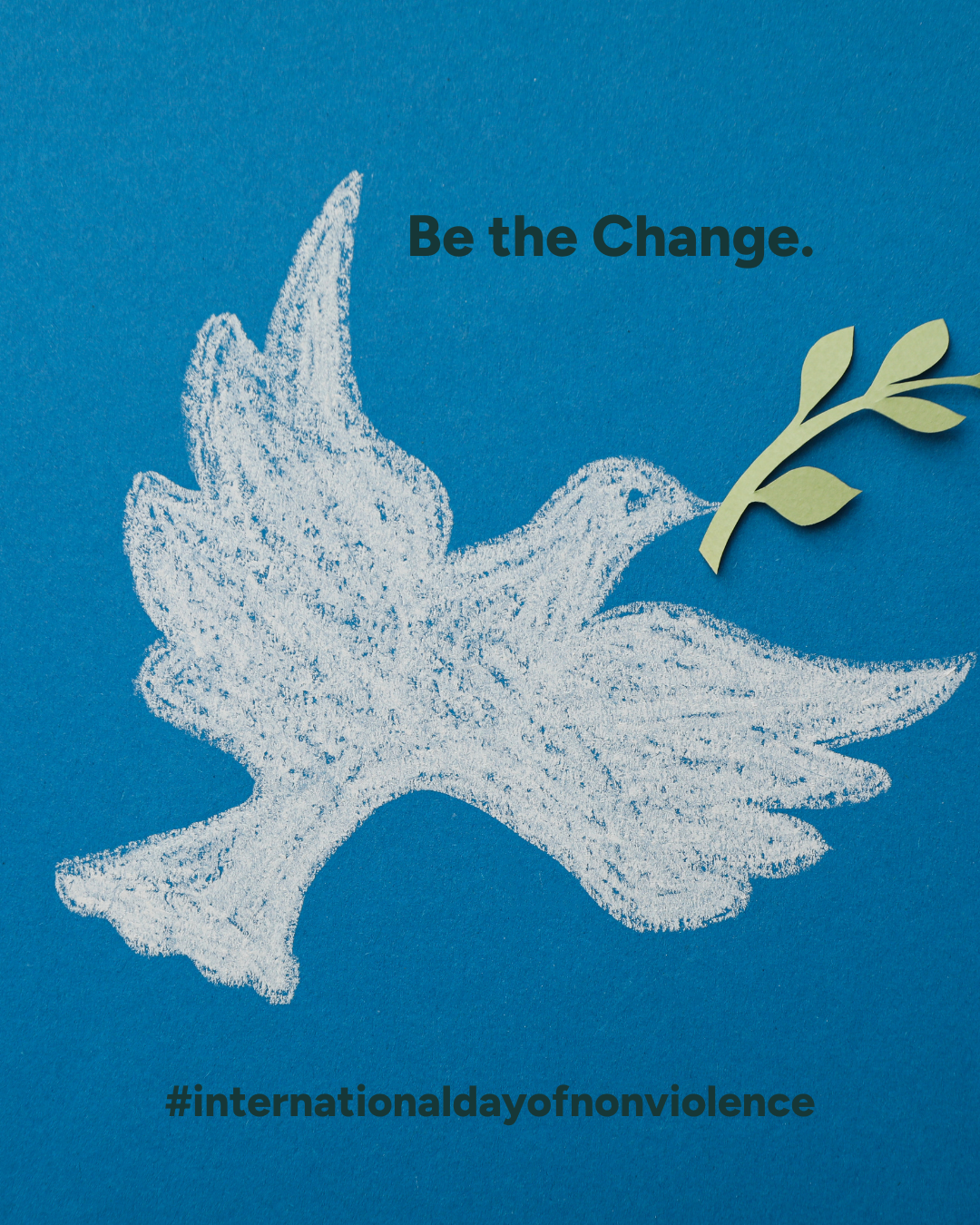
International Day of Non-Violence: Be the Change

It's Time to Stand Up for Peace

The world of tomorrow will be, must be, a society based on non-violence.

- Mahatma Ghandi.

2 October 2025

Today marks the birthday of lawyer, and anti-colonial activist, Mahatma Ghandi, and in honour of his determination to see a violent free world made possible, his birthday now marks the International Day of Non-Violence.

And today, against a global backdrop defined by war, conflict, genocide and a concurrent rise in extremist misogyny, the Loddon Consortium for Gender Equality & Violence Prevention re-news the call for local and international communities and nation-states to prioritise peace, and uphold the universal rights of all human beings to live in safety, with equality and dignity.

One of the greatest challenges facing our time, is the urgent need to create a culture of peace: not just the absence of war and conflict, but an enduring social change agenda that centres equality and respect for all.

We have not yet known peace.

What we have, even at the best of times, is simply the absence of war. The absence of conflict.

But never peace.

We are a society defined by globalisation – built on the back of ongoing colonisation, the forceful and hostile takeovers of lands from indigenous peoples right across the world. The forceful and hostile removal of people from their homes and from their lands to lands far removed from songlines, from bloodlines, from home. And it is from these violences that we have created our legal systems, our justice systems, our ways of governing, and informed our beliefs and our values on who is deserving and who is not.

These systems, these beliefs have contributed to the ongoing oppression and violence experienced by First Nations people, by women and children, people living with disability, folk from diverse, migrant and refugee communities.

These systems, these beliefs have led armies to invade lands far from home; have justified and excused the bombs and bullets and the invasions. They have led to discourse that describes the murder of civilians as ‘casualties’: as though the loss of life was by chance or accident, rather than a deliberate tactic of war.

But even in the absence of war or conflict or genocide, it remains that we live in a world without peace. We live in a socio-economic landscape that upholds extremist male violence, rigid gender stereotypes and prioritises global market economies over people and lands.

It is a world where presidents with sexual violence rap sheets, get re-elected, where women’s bodily autonomy does not exist, even when we’re dead: the rapid repellation of women’s reproductive rights and access to abortions has occurred in countries not at war.

It is a world where our closest allies have laws that make it legal for adult men to marry girl children, and where our political leaders shake hands with Jeffery Epstein’s closest associates and do trade deals with countries who sniper children.

We are witnessing, seemingly overnight, an unprecedented escalation in violence right across the world – no country, nor its people immune.

These violences are happening here on our own doorstep, in our own backyards and in our homes.

The recent racist fueled marches that swept across the streets of Melbourne’s CBD and led to a violent attack on Camp Sovereignty, the fatal attack on two young children making their way home from the bus,  the 50 women who have been murdered since January 2025 – should give us all pause to reflect on how we, as a society continue to condone violence.

The killing of women globally has more than doubled in 2023, than the previous year. Every 10 minutes a woman is murdered. We know that these figures have continued to escalate with Sudan and Palestine reporting extensive ongoing conflict and genocide.[1]

Sexual violence is also on the rise, both here at home and globally. In 2023, UN-verified cases of conflict-related sexual violence soared by 50 per cent: 95 percent of the victims were women and girls, close to have half were perpetrated against children: 98 percent of committed against girl children.

In 2024 Australia recorded an 11% increase in the number of sexual assaults recorded by police. This is the 12th year of increased reporting of sexual assaults and the highest ever in the 31-year history of the Australian Bureau of Statistics.

These are the reported cases. We know that for every recorded case, many more go unrecognised, unrecorded and unreported.

And as we see the bombs drop, entire cities wiped off the map; as we see and hear of harrowing stories of violence coming out of Sudan, and as we receive what seems like almost daily headlines of yet another woman murdered in her home by a person she once trusted, it can be overwhelmingly difficult to maintain hope for a future that is free from violence, where people can live to see gender and social equality.

And yet, it is possible.

Because we are surviving. The change-makers, the peace-makers, the humanitarian workers, the social workers, the social justice protesters, the everyday person making a stand against violence. We outnumber those who seek to do us harm.

And we refuse to go away, refuse to be silenced and refuse to give up hope. Wars, conflicts, oppression and genocide have never managed to silence us.

And while we grapple with meeting the very real and present needs of those most vulnerable in our communities to prevent harm, a harm inflicted more often than not, by the very system in which we operate, we resist.

We fight back.

Not with swords, or bullets or bombs, but instead with determination and a commitment to non-violence, to be the change we seek to see in the world.

Each and every day, we, the change-makers, the peace-makers, the humanitarian workers, the social workers, the social justice protesters and the everyday person making a stand against violence continue to resist and through non-violent action make lasting change. We’ve done it before, we will do it again. And again, and again.

Before 1975, family violence in Australia was not a crime. Similarly, until the 1990s married men were allowed to rape their wives in this country; immune from criminal charges, unless she could prove it was ‘aggravated’. When is rape not a violence?

The much-needed legal reforms that exist today, that recognise family violence and raping your wife as a crime, did not happen in a vacuum and importantly it did not come from the behest of the government: it came from the people. And importantly, it came from the non-violent resistance of the feminist movement of the 1960s and 1970s.

Family and sexual violence services exist in this country because of these trailblazing women. Women and community health centres exist because of these trailblazing women.

And to this day, our feminist principles guide our non-violent resistance and inform our advocacy and dissent.

And while our specialists services work tirelessly to meet the ever-increasing demand, we know that our work is far from over.

Reforms can only take us so far when the system itself is built on oppressive, colonial practices. Each and every year, we face funding cuts, we face legislative reforms that seek to pull back on hard won rights: most notably we see the trickle-down effects of global politics in our states and territories as the race to the bottom of reproductive rights takes wind. We are dismayed at South Australia’s recent consideration of repelling reproductive rights for women to access abortions. It follows fast in the footsteps of hospitals right across Victoria and New South Wales. How long until our dead bodies are also forced to grow the next generation of children? In solidarity with Adriana Smith and her family, we make a stand that no woman should be forcibly kept on life support to maintain a pregnancy. No one should be forced to keep a pregnancy against their will.

Our governments cannot end violence against women in a generation, when that violence is written into its own legislation.

Violence begets violence.

The only way to end violence is through non-violence.

It will take the dismantling oppressive, patriarchal systems, and it will take time.

But time starts today. As it did yesterday and as it will tomorrow.

It’s time to raise our voice, this International Day of Non-Violence. It is time we stand with the peace-makers, the humanitarian workers, the social workers.

It is time to stand with the social justice protestors, with the everyday person making a stand against violence.

It is time to stand with the victim survivors. It is time for us to stand up for those who can no longer stand for themselves – whose lives have been forcibly cut short through violence.

We are stronger together and collectively we can be the change the world needs.

Let us lead with kindness and love – that is the greatest power of all.


[1] UN Women 2024. Global Database on Violence Against Women and Girls. Available from: data.unwomen.org

Sign up to our newsletter.

Receive our latest news, including sector resources and events, and hear how we're supporting our community.

Coercive Control: An Endemic Tactic of Family Violence

Coercive Control: An Endemic Tactic of Family Violence

Recent dialogues and media attention have again placed an important spotlight on the dangers and devastating impacts of coercive control.
21 May 2025

This is a welcome opportunity to highlight the importance of understanding, recognising and responding to this insidious and dangerous tactic.

Coercive control is a repeated pattern of abusive, manipulating and intimidating behaviours and almost always underpins the dynamics of family and domestic violence. Perpetrators use coercive and controlling tactics and behaviours most often within intimate partner relationships, with current and former partners and within broader family relationships, including against children and elders.

Coercive control is a largely gendered issue and while people of all genders can perpetrate or experience coercive control, it is overwhelmingly perpetrated by cisgender men against cisgender and transgender women.

Coercive control is a range of deliberate tactics, with perpetrators using subtle, underhanded and manipulative behaviours that directly target victim survivors. These tactics are used in a methodical and deliberate way, and include physical and non-physical behaviours.

These tactics and behaviours may only be recognised and visible to perpetrators and victim survivors: they are often invisible or unnoticed by others. These behaviours intimidate, humiliate and coerce, causing fear, hurt, isolation and limits to victim survivors’ freedom of choice.

Examples of coercive control include gestures, looks, jealousy, social isolation, put downs, threats to harm, financial, legal and systems abuse. You may see or notice subtle changes over time from the impacts of coercive control, with victim survivors having reduced confidence, changing their behaviour, limiting and restricting their movements and activities or isolating themselves from family and friends.

Impacts

Coercive control is serious. It can cause immediate and long-term harm. The impacts often get worse over time and continue after the relationship has ended. Separation and relationship breakdown can be the most dangerous time for victim survivors. Coercive control can impact every part of a person’s life including their mental and physical health, relationships, employment and financial security. The abuse can also impact on a person’s sense of safety, their independence, and self-esteem – making them feel trapped, powerless and alone.

We know coercive control is a defining feature of family violence and is present in most, if not all cases where family violence occurs. For example, of the 2,247 victim survivor risk and safety assessments that CNV conducted between July to December 2024, controlling behaviours were present in 83 per cent of cases. This behaviour, along with intersectional risk factors of perpetrator alcohol and drug misuse, stalking and jealousy are key evidence-based lethality and risk indicators. This is not an isolated issue. Extreme risk was identified in 43 per cent of the victim survivors’ assessments: with 10 or more evidence-based risk factors identified.

Supports

Seeking support and/or leaving an abusive relationship can be difficult and victim survivors may feel like it is impossible to leave due to the risks they are facing. But help is available.

CNV provides specialist integrated support to both victim survivors and perpetrators of family violence.

We assess the safety and risk of victim survivors and perpetrators, to provide responses that uphold safety and accountability and mobilise systems. We work collaboratively to address the needs of our clients.

If you or someone you know is experiencing family violence, contact us for advice and support. Alternatively, if you are supporting someone who is experiencing family violence you can refer them directly to our service.

Reach out for support today

At CNV, we're here to help. You can call, phone or simply drop in.

Reflections from the UN Commission for the Status of Women

Reflections from the UN Commission for the Status of Women

The UN Commission for the Status of Women (CSW) was established in 1946, and is the primary international body dedicated to the promotion of gender equality, and the rights and the empowerment of women.
By Margaret Augerinos, CEO for Centre for Non-Violence

In March this year, I travelled to New York alongside Yvette Jaczina, CNV’s Executive Manager of Programs & Services, where we attended the sixty-ninth session of the UN Commission on the Status of Women (CSW69).

The UN Commission for the Status of Women (CSW) was established in 1946, and is the primary international body dedicated to the promotion of gender equality, and the rights and the empowerment of women. This year, the CSW celebrated a major milestone: the 30th anniversary of the Beijing Declaration and Platform for Action.

The Beijing Declaration is the world’s most comprehensive, visionary plan ever created to achieve the equal rights of all women and girls. Agreed by 189 governments in 1995, at the Fourth World Conference on Women, it centres on 12 areas of action – referred to as “critical areas of concern”. These cover jobs and the economy, political participation, peace, the environment, ending violence against women and more.

It was quite the experience being in New York to celebrate this landmark agreement in a backdrop of some of the most regressive and repressive actions, policies, laws and decisions occurring across the globe.  Whilst we have come a long way, there is still so much more to do in a context where hard fought for rights and gains are easily stripped away.

The CSW events include a large number of sessions and parallel events on a range of topics. We attended a number of sessions over two weeks with a focus on hearing from diverse voices and First Nations people across the globe.

One of these sessions included Maori and Pacific women and girls who shared reflections on the impact of national strategies to address gender-based violence and racism. The presenters discussed how these strategies did little to incorporate the voices of lived and living experience. Other sessions discussed the advocacy for constitutional transformation focused on reconciliation, remediation, restoration and reconstruction and for this to be developed in genuine partnership and co-design representing the ideals defined in the Treaty process.

The UN Secretary-General, Antonio Guterres, proudly spoke of and recognised the importance of feminist activists and civil society. He acknowledged the increasing backlash and misogyny and said we needed to continue to resist and push back against repressive forces.

Part of the trip was spent supporting the ongoing work of the Global Network of Women’s Shelters (GNWS). I participated in the annual GNWS board meeting, attended the GNWS parallel event, several meetings to support advocacy and securing funds for GNWS and was involved in the initial steps to establish the Oceania Network for the GNWS.

Finally, CNV co-presented a parallel session with WESNET and Safe + Equal on how peak organisations contribute to strengthening frontline services addressing gender-based violence. The session explored the role of peak bodies in advocating for political, legislative and social reforms, and increased funding for specialist services. Presenters highlighted how state and national collaboration enhances support for frontline services and the communities they serve, and the importance of partnerships, resources, and advocacy in building effective and sustainable responses to gender-based violence. CNV was able to talk directly to how the WESNET and Safe + Equal had strengthened and supported our work. It was a great session and well received by the audience.

Bendigo candlelight vigil to honour victims of family violence

Bendigo candlelight vigil to honour victims of family violence

The Loddon Consortium for Gender Equality & Violence Prevention (the Consortium) is holding a candlelight vigil on National Domestic Violence Remembrance Day, Wednesday 7 May 2025.
1 May 2025

The vigil will pay tribute to the women and children who have lost their lives to family and domestic violence, and those have experienced or been impacted by it. The vigil will take place in Rosalind Park, adjacent to the Conservatory Gardens (opposite Grill’d), commencing at 6pm. The vigil is open to everyone to attend and is a free event.

National Domestic Violence Remembrance Day is held annually on the first Wednesday of May, as part of Domestic Violence Prevention Month. Vigils are being held across Australia to remember individuals who have died and raise awareness about the impact of family violence.

In 2024, 103 women and 20 children lost their lives to family and domestic violence in Australia. We also recognise that there are those whose lives have been lost to domestic violence who may not yet be known. Their lives matter and we recognise and honour their story.

The vigil is an opportunity to honour and remember these individuals. Attendees will have the opportunity to write a short message acknowledging those who have died, and the courage of all victim survivors.

The Consortium acknowledges the strength and resilience of survivors of family violence. Family violence is a structural and social issue that significantly impacts women and children, families and communities. We recognise the courage of victim survivors, along with the dedicated workers responding to family violence.

Trained staff will be available for anyone who requires further support or needs assistance accessing services.

The Consortium is a partnership of five specialist gender-based violence organisations across the Loddon area:

  • Centre for Non-Violence (CNV)
  • Annie North Women’s Refuge
  • Centre Against Sexual Assault Central Victoria (CASACV)
  • Women’s Health Loddon Mallee
  • Sunbury and Cobaw Community Health.

The Consortium provides integrated regional programs and services for victim survivors of family and sexual violence, men who use violence towards family members, and works to prevent gendered violence.

If you, or someone you know is experiencing family violence, or you are concerned about your behaviour towards your family, help is available.

In any emergency call: 000

Centre for Non-Violence: (free call) 1800 884 292
The Orange Door Loddon: (free call) 1800 512 359
Safe Steps: (24/7 statewide service) 1800 015 188
Centre Against Sexual Assault Central Victoria: (03) 5441 0431

Ends

For all media enquiries, contact Rachel Dale, Media and Communications Lead at CNV via [email protected] or 0488 991 978.

Funding certainty needed to address family violence

Funding certainty needed to address family violence

CNV calls for increased and sustained funding of the family violence sector.
15 April 2025

As Central Victoria’s leading family violence prevention, response and recovery service, the Centre for Non-Violence (CNV) faces ongoing funding uncertainty through time-limited funding for some critical programs and services, and without the required investment needed to respond to all people who require support.

We are already at capacity and simply cannot afford uncertainty.

We are not alone.

Family violence organisations right across the nation have been calling on governments to walk the talk and commit to increased and secured funding for the sector. Specialist family violence organisations like CNV work, often outside of the spotlight, with thousands of individuals each and every year to provide programs and services that directly improve and increase safety. The work we do with victim survivors to increase safety and wellbeing and with perpetrators to take responsibility for their use of violence, works.

We are calling on our Commonwealth leaders to support us to do the work it takes to end violence against women and children.

Our specialised workforce deserve fair and secure pay conditions.  The programs and services that we deliver to our community deserve fair and secure funding to be able to operate at full capacity, and our work in preventing the violence before it begins requires dedicated funding.

We are in a national crisis. Last year a woman was murdered as a result of gender-based violence every four days. 2025 is proving yet again, to be another year where women and children are being murdered in entirely preventable circumstances.

It is not ok that as a frontline service we constantly need to make program decisions based on insecure or inadequate budget conditions rather than on the need. And need for our services has never been greater. We are seeing a marked increase in the number of victim survivors and people who use violence accessing our service. In particular we are seeing greater numbers of children requiring specialist family violence support. We cannot operate in a budget vacuum. Especially when we know that in Australia, the cost of violence against women and their children is estimated at $26 billion a year (Commonwealth of Australia, 2022).

Last year, our staff across the Orange Door Loddon (TOD) and CNV offices provided over 50,000 hours of specialist support for victim survivors. The number of victim survivors that our specialist -family violence staff worked with in TOD increased by almost 10 per cent. Similarly, CNV saw a distinct increase in the number of direct referrals to our service with over 2,400 victim survivors accessing much needed support. Not only are we seeing a rise in the number of people seeking support, we are also seeing a rise in the number of complex and high-risk cases requiring intensive management. By way of example, of the 3520 MARAM assessments (how specialist services and police assess family violence risk) we conducted this year, 27 per cent of victim survivors had 10 or more lethality indicators. When someone has five or more, they are considered to be at imminent risk of lethality or serious harm.

We cannot afford to turn people away from much needed specialist family violence support.

While we have wholeheartedly welcomed the Federal Government’s commitment to ending violence against women and children through the National Plan to End Violence against Women and Children 2022-2032, the most recent budget hand down has failed to bring the family and sexual violence sector out of crisis mode.

The National Plan identified that one of the key pillars to achieve generational change was to strengthen the capacity of specialist family, domestic and sexual violence services (Commonwealth of Australia, 2022). However, without significant, and ongoing funding to the specialist sector, the National Plan has no way of achieving this objective.

Each and every year, the sector faces extraordinary uncertainty in budget allocation all while each and every year, the demand for our services increases. In the Loddon Region alone, we are seeing a significant spike in the number of family violence incidents.  We know that these figures are reflected right across the states and territories.

It is a confronting message to not only the sector but also to the community, that the lives of women, children and diverse communities – who are at the highest risk of harm from family violence – are further jeopardised by line items on a budget.  We need to be adequately resourced to do our job, because without us, there is no safety net in place for the thousands of victim survivors that walk through our doors every year.

An investment in the family violence sector is an investment towards a future society that is free from gendered violence.

For further information:

Dr Clare Shamier
Head of Business Development and Advocacy
e: [email protected]
m: 0488 281 528

For general media enquiries:

e: [email protected]

International Women’s Day

International Women’s Day 2025

A year to demand change and reclaim our future.
8 March 2025

Today, right across the world we are gathering to celebrate and acknowledge the incredible achievements, resilience and determination of women and girls for an equal place at the table.

And there is much to celebrate. We see daily, the incredible work, resistance and strength of the women and girls we meet, from our own family members, to friends and strangers in the street.

We see women represented at some of the highest levels of government, business, sport, the arts and the music industry. We see women and girls each and every day bringing to the table innovation, expertise and a determination to push forward and expand the possibilities for all of us.

Representation matters.

And yet, women are still largely underrepresented in leadership, women are still underpaid and undervalued in their jobs.

And women are devastatingly over-represented in gender-based violence. And for women and girls from diverse backgrounds, particular Aboriginal women and girls, their lived experience sees them more than 33 x more likely to be hospitalized as a result of family violence.

And as we gather today, in our thousands, spending time reflecting on the hard-won rights and advancements that the women who have walked before us, alongside us and are following in our footsteps have been fighting for, and continue to fight for, we are seeing, in very real time, the rapid rise of systemic and societal misogyny, the likes of which that we have not seen for many decades.

We are seeing again the normalisation of rigid, outdated gender roles and a rise in the public’s misconception that somehow, the advancement of women is a direct threat to men’s rights. That our right to say no, is a threat. That our right to walk away from a violent relationship a threat, that our right to choose our reproductive futures is a threat, that our right to lead is a threat.

And so it is, that as we advance, all around us the tables are turning, the landscape shifting and with it, the rules of the game. The shadow of far-right social media influencers are entering politics, the billionaires with sexual violence rap sheets are informing national policies and influencing global politics and trade.

Capital punishment for seeking an abortion. Abolition of diversity and inclusion positions and policies. The illegal stoppage of international aid. The forced removal of children to foreign countries, often without their parents. Bills to return to the days before ‘no fault’ divorces.

These changes are not outliers, they are part of sweeping reforms to dismantle the hard-won gains and rights of those most vulnerable to men’s violence. War does not start with a bomb.

It starts with a pen. And right now, we are at war. As women and girls in 2025, we are under attack like never before.

How easily our rights are stripped from us:

  • Our right to self-determination.
  • Our right to reproductive safety and planning.
  • Our right to be decision-makers in our own right.
  • Our right to work.
  • Our right to equal pay.
  • Our right to live in peace and without violence.
  • Our right to be safe at home.

Dismantled.

Yes, we have come so far over the last several decades. But let’s be honest: the bar was always set far too low. Yes:

  • She has the right, if she is granted it, equal pay.
  • She has the right, if she can afford it, to access reproductive healthcare.
  • She has the right, if she can access childcare, to go to work.
  • She has the right, if he doesn’t kill her first, to leave her husband.

But what a woman does not have, and has never had, is the right to equality.

Not a single country has achieved gender equality. Not one. Not here, not there, not anywhere.

And we know that the only way to end violence against women, girls and diverse communities, is through equality. Equality is about respect and in its absence, we are left with disrespect. And for women and girls, that’s a dangerous place to be.

Every 10 minutes, a woman is murdered around the world because of gender-based violence.

Every week in Australia a woman is murdered as a result of gender-based violence. More than 80 per cent of the time, by a man she knew.

Every six minutes police in Victoria respond to family violence incidents.

In our own region we are seeing across all LGAs where CNV operates, a rise in reported family violence incidents, a rise in the number of breaches, but concurrently a decrease in the number of convictions.

We also know that these numbers do not reflect the reality facing families in our region, where family violence too often occurs in the home, away from public eyes, still hidden behind closed doors, unreported. Not believed.

She makes it up.

She’s exaggerating.

It was just a joke.

For 100 women last year in Australia murdered as a result of gendered violence, for the thousands of women and children hospitalised last year as a result of family violence, and for the thousands of women and children experiencing homelessness as a result of family violence:

She was not making it up. She was not exaggerating. It’s not a joke.

We know that the experiences of family and gendered violence in Australia is not unique. We know the rise of violence is not isolated. Globally, across every country in every town and city, women and girls are experiencing higher rates of inequality and violence than in previous years. The rise of misogyny is increasingly leading to extremism. We need to pay attention.

We must, as part of our conversations of celebration today, remember that for millions of women and girls around the world today, as it was yesterday and as it will be tomorrow, that inequality is the very definition of our collective lived experience.

We must continue to fight for our voice to be heard.

And we will continue to push forward, to demand change, and reclaim our future. Our lives depend on it.

International Human Rights Day

International Human Rights Day

A statement by the Loddon Consortium for Gender Equality and Violence Prevention to demand the protection of our human rights.
10 December 2024

76 years ago today, a landmark document – the Universal Declaration of Human Rights, was adopted by the General Assembly of the United Nations. It enshrined the inalienable rights that everyone is entitled to as a human being - regardless of race, colour, religion, sex, language, political or other opinion, national or social origin, property, birth or other status.

Importantly, it set out for the first time, that fundamental human rights must be universally protected.

76 years later, the rights of the billions of people – most predominantly women and children – around the world are under unprecedented threat.

This is why, this International Human Rights Day, the Loddon Consortium for Gender Equality & Violence Prevention has united to stand up and demand that protecting human rights is the only way forward.1 We must protect:

Our right to exist.

Our right to live in safety.

Our right to equality.

Every 10 minutes a woman is killed around the world as a result of intentional violence. In 2023 alone, over 51,000 women had their lives forcibly cut short by acts of violence, mostly by someone known to them.2

Devastatingly, the violence does not stop there.

Globally, 650 million (or 1 in 5) girls and women alive today have been subjected to sexual violence as children.3

State-sanctioned violence is also escalating in unprecedented magnitude.

Globally, tens of thousands of lives have been intentionally, and forcibly ended due to violence, with unprecedented violence escalating over the last 14 months. War and conflict, disproportionately impacts women, children and diverse communities. A 2023 UN Women report stated that in 2023:

[T]he proportion of women killed in armed conflicts doubled compared to 2022. Four out of every ten people who died as a result of conflict in 2023 were

women. UN-verified cases of conflict-related sexual violence increased by 50 per cent.4

In Gaza alone, more than 43,000 people have been killed – 70 per cent of whom are women and children.5 We know that this figure is underreported, with conservative estimates as published by numerous agencies, including the United Nations, the Gaza Ministry of Health, and world-renowned medical journal, The Lancet recently estimating that the death toll will eventually fall within the hundreds of thousands.6

We are what we allow.

The hard truth is, that as a community, we allow human rights abuses.

In Australia, we are bearing witness to the intentional killings of women as a result of gender-based violence every three days. During the last week of November, at the height of the 16 Days of Activism against Gender-based Violence, 6 women in 7 days were killed.

This is not an anomaly. Every six minutes Victoria Police respond to a family violence incident. The Victorian Crime statistics to June 2024 paint a sobering picture: police recorded over 98,000 family violence incidents in the previous 12 months. This signalled a

6.1 percent increase from the previous year. Victim survivors of family violence continue to predominantly be women and children, while perpetrators continue to predominantly be men.7

Rates of sexual violence in Australia over the last 12 years, have also increased year on year. Samantha McNally, ABS head of crime and justice statistics, stated that 2023 “[…] is the highest rate of sexual assault victim-survivors recorded in our 31-year dataset.”8

Nationally9:

  • 1 in 5 women experience sexual violence since the age of
  • 1 in 16 men have experienced sexual violence since the age of
  • 98% of reported sexual violence are perpetrated by

And as rates of violence increase, funding models continue to be unsustainable. Core services for sexual violence, family violence, housing, and allied health operate under conditions that are defined by short-term, underfunded budgets that were never going to be able to allow services to meet demand.

Unilateral budget cuts and funding provisions to services are increasingly decided without consultation, without impact assessments and importantly, without future planning in place to safeguard victim survivors from further harm.

Politically, we are witnessing a disturbing trend towards an extremist right that is actively seeking to dismantle the inroads that feminists and human rights activists have fought long and hard for. Marginalised communities who are already experiencing increased rates of harm, particularly those from First Nation, LGBTQIA+, CALD and people with disability are at profound risk of further harm where human rights are not universally protected.

Within a context where gender equality has always been far from reach, the reality is that what was built over decades, has in just a handful of years, been dismantled, and we are again fighting on the frontlines for the most basic of human rights.

The incredible advocacy work of the trailblazing feminists that came before us must serve as an important reminder of why, more than ever, we must not be complacent in our advocacy.

Now is the time for us to make a united stand, to mobilise and take action to create a free and just world for all. Because now – more than ever – those at greatest risk of harm are facing extraordinary threats to safety and wellbeing.

We cannot do this alone. We cannot do this in isolation.

The only way forward is together, connected, with feet on the ground demanding collective action from each other, our peers and allies:

In solidarity for the victim survivors. In solidarity for the peacemakers.

In solidarity for the humanitarian workers. In solidarity for the specialist services.

In solidarity for the advocates.

In solidarity for the women, children and those from diverse communities of whom each and every life matters.

It’s back to the grassroots.


Signed:

Julie Oberin, Annie North Women’s Refuge

Kate Wright, Centre Against Sexual Assault Central Victoria

Margaret Augerinos, Centre for Non-Violence

Jeremy Hearne, Sunbury and Cobaw Community Health

Kellie Dunn, Women’s Health Loddon Mallee


1 Universal Declaration of Human Rights, Article 1. Available from: https://www.un.org/en/about- us/universal-declaration-of-human-rights [Accessed: 3 December 2024]

2 United Nations 2024. ‘One woman or girl is killed every 10 minutes by their intimate partner or family member’, Press Release, 25 November. Available from: https://www.unwomen.org/en/news- stories/press-release/2024/11/one-woman-or-girl-is-killed-every-10-minutes-by-their-intimate- partner-or-family-member [Accessed: 3 December 2024]

3 United Nations Children’s Fund, 2023. International Classification of Violence against Children, New York, 2023.

4 UN Women 2023. ‘War on women – Proportion of women killed in armed conflicts doubles in 2023’, press release, 22 October 2024. Available from: https://www.unwomen.org/en/news- stories/press-release/2024/10/war-on-women-women-killed-in-armed-conflicts-double-in- 2023#:~:text=In%202023%2C%20the%20proportion%20of,increased%20by%2050%20per%20ce  nt. [Accessed: 9 December 2024]

5 Khatib R, McKee M and Yusuf S 2024. ‘Counting the Dead in Gaza: difficult but essential’, Vol.404(10499), p. 237.

6 Ibid.

7 Victorian Crime Statistics 2024. ‘Family Incidents’. Available from: https://www.crimestatistics.vic.gov.au/crime-statistics/latest-victorian-crime-data/family-incidents-2     [accessed: 28 November 2024]

8 Australian Bureau of Statistics 2024. ‘Recorded sexual assaults reach 31-year high”, media release, ABS, Canberra. Available from: https://www.abs.gov.au/media-centre/media-releases/recorded- sexual-assaults-reach-31-year-high [Accessed 9 December 2024]

9 Australian Bureau of Statistics 2023. ‘Personal Safety Survey’, available from: https://www.abs.gov.au/statistics/people/crime-and-justice/personal-safety-australia/latest-release and Australian Bureau of Statistics 2021. ‘Sexual Violence – Victimisation’, 24 August. Available from: https://www.abs.gov.au/articles/sexual-violence-victimisation [Accessed: 9 December 2024]