Looming Funding Cliff a Family Violence Catastrophe Waiting to Happen

Funding Cliff a Family Violence Catastrophe Waiting to Happen

CNV is calling on the Victorian Government to urgently address funding instability for specialist family violence services.
17 February 2026

As outlined in CNV’s submission to the Victorian State Budget 2026–27, the family violence sector is facing a state-level funding cut of $118 million, with critical funding due to lapse on 30 June 2026. The shortfall comes at a time when demand for family violence support is at an all-time high, compounded by the worsening housing crisis, placing women and children at even greater risk.

Cutting $118 million from the family violence sector while demand and risk are escalating is not just short-sighted, it is dangerous. Without urgent action to extend lapsing funding beyond 30 June 2026 and provide long-term, indexed investment, women and children escaping violence will face an impossible choice: homelessness or harm.

A choice between homelessness and violence is no choice at all.

The Centre for Non-Violence calls on the Victorian Government, and all levels of government to urgently:

  1. Restore and extend lapsing family violence funding beyond 30 June 2026 for family and gender-based violence primary prevention, early intervention, response and recovery
  2. Support children and young people as victim survivors in their own right
  3. Invest in safe, secure and affordable housing as a core family violence response

Family violence is the leading cause of homelessness in Australia.[i] Women and children experiencing violence make up a disproportionate share of those seeking homelessness support. In 2024-25, women accounted for around 75 per cent of adults seeking housing support as a result of family violence in Australia.[ii]

Australia’s rental crisis, characterised by skyrocketing rents, low vacancy rates and insufficient social and affordable housing, is not only pushing more people into homelessness, but also worsening family violence outcomes. As housing options shrink, specialist family violence services are spending an increasing amount of time navigating housing systems, while simultaneously facing funding uncertainty that threatens their ability to respond.

In 2024–25, CNV provided 16,422 nights of crisis and transitional accommodation to 294 women and children, with 67 nights being the average length of stay. For Aboriginal and Torres Strait Islander women and children, the average stay was 74 nights. Of the 294 women and children accommodated, 81 remained in crisis accommodation for up to six months due to the lack of secure, long-term housing options. These alarming figures highlight how the lack of safe, affordable housing, combined with shrinking service capacity, are undermining victim survivors’ ability to rebuild their lives.

Emergency and crisis accommodation, including motel rooms, are not adequate solutions. They are often unsafe, temporary and far from ideal for victim survivors recovering from trauma. Motels lack basic safety features, privacy and support services, and frequently force families into spaces that trigger further harm.

Without access to secure housing and adequately funded specialist support, escaping violence becomes a prolonged and dangerous ordeal. Too many women and children are left with no option but to remain in unsafe, temporary accommodation or return to violent homes simply because there is nowhere else to go.

For more than three decades, CNV has supported thousands of victim survivors to leave violent relationships and begin rebuilding their lives. But today’s housing market, marked by soaring rents, record-low vacancy rates and a severe shortage of social housing, means that leaving violence is no longer just about safety. It is about survival.

Between 70-90% of victim survivors supported by CNV say that housing affordability (soaring rental prices, mortgage stress) impacts their decision about when or whether they can safely leave. Many are forced to return to abusive relationships simply because they have nowhere else to go.

CNV’s Victorian State Budget submission makes clear that cutting $118 million from the family violence sector while demand and risk are escalating is not just short-sighted, it is dangerous.

Ending family violence requires more than crisis responses. It requires stable housing, secure funding, and the political will to ensure that every person has the right to safety, dignity and a place to call home.

ENDS

For all media enquiries, contact Rachel Dale, Media and Communications Lead at CNV via [email protected] or 0488 991 978.

[i] Australian Institute of Health and Welfare, (4 December 2025), Specialist homelessness services annual report 2024–25, retrieved 4 February 2026, https://www.aihw.gov.au/reports/homelessness-services/specialist-homelessness-services-annual-report/contents/clients-who-have-experienced-fdsv.

[ii] Ibid.

Lethality risks for family violence victims rise more than 50% across Central Victoria

Lethality risks for family violence victims rise more than 50% across Central Victoria

People experiencing family violence across Central Victoria are at greater risk of harm or even death, according to new data from the Centre for Non-Violence (CNV).
25 November 2025

CNV is Central Victoria’s leading family violence service, providing support for people in the local government areas of Campaspe, Central Goldfields, Greater Bendigo, Loddon, Macedon Ranges and Mount Alexander.

According to CNV’s 2024-25 Annual Report, the organisation completed comprehensive risk assessments (MARAM Assessments) for 2,443 victim survivors, against 15 lethality indicators. Over the past 12 months, the proportion of victim survivors with 10 or more lethality risks rose from 27% to 42%: a more than 50% increase.

Victim Survivors with multiple risk indicators are considered at imminent risk of lethality or serious harm. The data highlights the growing risks faced by people experiencing family violence, particularly in regional areas.

The highest risk factor identified is coercive control. This includes perpetrator tactics such as stalking, jealousy, technology abuse, misuse of alcohol and other drugs, threats of harm and breaches to intervention orders.

Victim Survivors with five or more risk indicators are considered at imminent risk of lethality or serious harm. When someone has 10 or more risk indicators, the risk increases significantly. The data highlights the growing risks faced by people experiencing family violence, particularly in rural and regional areas.

November 25 is the International Day for the Elimination of Violence against Women and the start of the 16 Days of Activism against Gender-based Violence. This annual, global campaign, is led by UN Women, and brings people together to prevent and end gender-based violence. Each year, people rally to raise awareness of gender-based violence and how it can be prevented in this international campaign.

There is a long way to go to end family violence and ensure safety for women around the world.  The new data confirms that the issue is continuing to intensify across the region. The campaign raises awareness of the problem and what we as communities and individuals can do to create change.

“The Broken Trust investigation by Guardian Australia is testament that family violence is not being taken as seriously as it needs to be. The 16 Days campaign is a time to come together to create change,” says Margaret Augerinos, CEO of CNV.

“Our community was devastated by a family violence murder, in 2023. The last thing we want to see is another death. This is a community problem, that we need to tackle as a community. We need to work together to prevent violence against women, and that starts with respect,” she says.

If you, or someone you know is experiencing family violence, or you are concerned about your behaviour towards your family, help is available.

In any emergency call: 000

  • Centre for Non-Violence (Monday- Friday, Business Hours): 1800 884 292
  • The Orange Door (Monday-Friday, Business Hours): 1800 512 359
  • Safe Steps (24/7 statewide crisis response service): 1800 015 188
  • Djirra (Aboriginal and Torres Strait Islander Specialist FV Service): 1800 105 303
  • Rainbow Door (LGBTQIA+ Specialist FV Service, 10am-5pm/7 days a week): 1800 729 367

—- ENDS—

For all media enquiries, contact Rachel Dale, Media and Communications Lead at CNV via [email protected] or 0488 991 978.

Sign up to our newsletter.

Receive our latest news, including sector resources and events, and hear how we're supporting our community.

Submission to the UN Human Rights Office

Submission to the UN Human Rights Office

Guidelines on addressing multiple and intersecting forms of discrimination against women and girls with disabilities in law, policy and practice.
29 October 2025

The Centre for Non-Violence and Women with Disabilities Victoria recently welcomed the opportunity to provide written input to the United Nation’s Human Rights Office of the High Commissioner’s draft guidelines on addressing multiple and intersectional forms of discrimination against women and girls with disabilities.

This was an opportunity for our organisations to highlight the lived experiences of women, girls and gender-diverse people with disabilities living in Victoria, particularly the experiences of living in regional and rural settings and advocate for long-term meaningful change that challenges discriminatory practices that further exacerbate harm and pathways to equality.

Intersectional factors increase risk of harm and discrimination for women, girls and gender diverse people with disability. Multiple intersecting factors compound individual, community and systemic discrimination and oppression.  Our submission spoke at length to the impacts of family violence on women with disabilities, including the intersecting discrimination of finding safe and secure housing and access to justice and healthcare.

Sign up to our newsletter.

Receive our latest news, including sector resources and events, and hear how we're supporting our community.

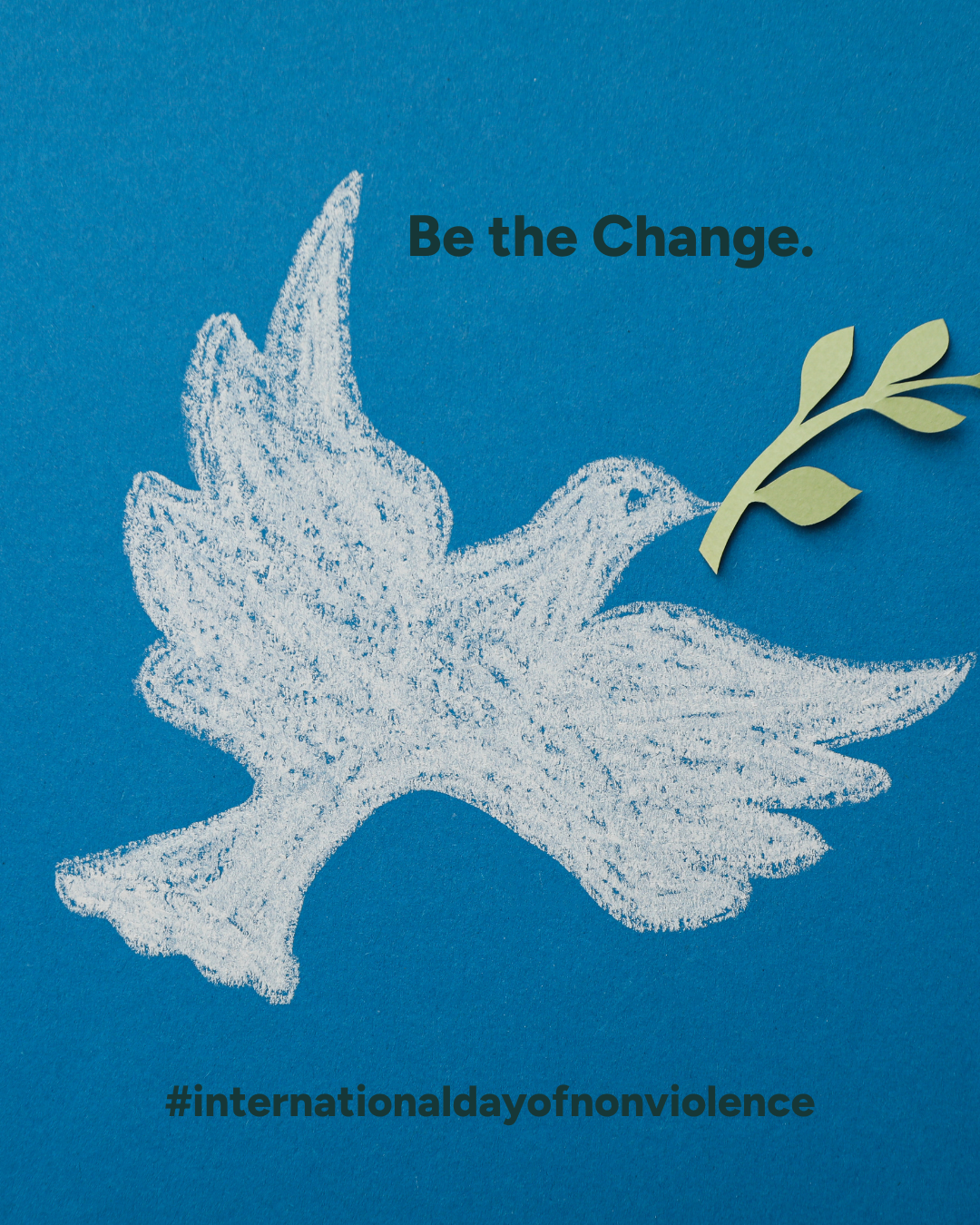
International Day of Non-Violence: Be the Change

It's Time to Stand Up for Peace

The world of tomorrow will be, must be, a society based on non-violence.

- Mahatma Ghandi.

2 October 2025

Today marks the birthday of lawyer, and anti-colonial activist, Mahatma Ghandi, and in honour of his determination to see a violent free world made possible, his birthday now marks the International Day of Non-Violence.

And today, against a global backdrop defined by war, conflict, genocide and a concurrent rise in extremist misogyny, the Loddon Consortium for Gender Equality & Violence Prevention re-news the call for local and international communities and nation-states to prioritise peace, and uphold the universal rights of all human beings to live in safety, with equality and dignity.

One of the greatest challenges facing our time, is the urgent need to create a culture of peace: not just the absence of war and conflict, but an enduring social change agenda that centres equality and respect for all.

We have not yet known peace.

What we have, even at the best of times, is simply the absence of war. The absence of conflict.

But never peace.

We are a society defined by globalisation – built on the back of ongoing colonisation, the forceful and hostile takeovers of lands from indigenous peoples right across the world. The forceful and hostile removal of people from their homes and from their lands to lands far removed from songlines, from bloodlines, from home. And it is from these violences that we have created our legal systems, our justice systems, our ways of governing, and informed our beliefs and our values on who is deserving and who is not.

These systems, these beliefs have contributed to the ongoing oppression and violence experienced by First Nations people, by women and children, people living with disability, folk from diverse, migrant and refugee communities.

These systems, these beliefs have led armies to invade lands far from home; have justified and excused the bombs and bullets and the invasions. They have led to discourse that describes the murder of civilians as ‘casualties’: as though the loss of life was by chance or accident, rather than a deliberate tactic of war.

But even in the absence of war or conflict or genocide, it remains that we live in a world without peace. We live in a socio-economic landscape that upholds extremist male violence, rigid gender stereotypes and prioritises global market economies over people and lands.

It is a world where presidents with sexual violence rap sheets, get re-elected, where women’s bodily autonomy does not exist, even when we’re dead: the rapid repellation of women’s reproductive rights and access to abortions has occurred in countries not at war.

It is a world where our closest allies have laws that make it legal for adult men to marry girl children, and where our political leaders shake hands with Jeffery Epstein’s closest associates and do trade deals with countries who sniper children.

We are witnessing, seemingly overnight, an unprecedented escalation in violence right across the world – no country, nor its people immune.

These violences are happening here on our own doorstep, in our own backyards and in our homes.

The recent racist fueled marches that swept across the streets of Melbourne’s CBD and led to a violent attack on Camp Sovereignty, the fatal attack on two young children making their way home from the bus,  the 50 women who have been murdered since January 2025 – should give us all pause to reflect on how we, as a society continue to condone violence.

The killing of women globally has more than doubled in 2023, than the previous year. Every 10 minutes a woman is murdered. We know that these figures have continued to escalate with Sudan and Palestine reporting extensive ongoing conflict and genocide.[1]

Sexual violence is also on the rise, both here at home and globally. In 2023, UN-verified cases of conflict-related sexual violence soared by 50 per cent: 95 percent of the victims were women and girls, close to have half were perpetrated against children: 98 percent of committed against girl children.

In 2024 Australia recorded an 11% increase in the number of sexual assaults recorded by police. This is the 12th year of increased reporting of sexual assaults and the highest ever in the 31-year history of the Australian Bureau of Statistics.

These are the reported cases. We know that for every recorded case, many more go unrecognised, unrecorded and unreported.

And as we see the bombs drop, entire cities wiped off the map; as we see and hear of harrowing stories of violence coming out of Sudan, and as we receive what seems like almost daily headlines of yet another woman murdered in her home by a person she once trusted, it can be overwhelmingly difficult to maintain hope for a future that is free from violence, where people can live to see gender and social equality.

And yet, it is possible.

Because we are surviving. The change-makers, the peace-makers, the humanitarian workers, the social workers, the social justice protesters, the everyday person making a stand against violence. We outnumber those who seek to do us harm.

And we refuse to go away, refuse to be silenced and refuse to give up hope. Wars, conflicts, oppression and genocide have never managed to silence us.

And while we grapple with meeting the very real and present needs of those most vulnerable in our communities to prevent harm, a harm inflicted more often than not, by the very system in which we operate, we resist.

We fight back.

Not with swords, or bullets or bombs, but instead with determination and a commitment to non-violence, to be the change we seek to see in the world.

Each and every day, we, the change-makers, the peace-makers, the humanitarian workers, the social workers, the social justice protesters and the everyday person making a stand against violence continue to resist and through non-violent action make lasting change. We’ve done it before, we will do it again. And again, and again.

Before 1975, family violence in Australia was not a crime. Similarly, until the 1990s married men were allowed to rape their wives in this country; immune from criminal charges, unless she could prove it was ‘aggravated’. When is rape not a violence?

The much-needed legal reforms that exist today, that recognise family violence and raping your wife as a crime, did not happen in a vacuum and importantly it did not come from the behest of the government: it came from the people. And importantly, it came from the non-violent resistance of the feminist movement of the 1960s and 1970s.

Family and sexual violence services exist in this country because of these trailblazing women. Women and community health centres exist because of these trailblazing women.

And to this day, our feminist principles guide our non-violent resistance and inform our advocacy and dissent.

And while our specialists services work tirelessly to meet the ever-increasing demand, we know that our work is far from over.

Reforms can only take us so far when the system itself is built on oppressive, colonial practices. Each and every year, we face funding cuts, we face legislative reforms that seek to pull back on hard won rights: most notably we see the trickle-down effects of global politics in our states and territories as the race to the bottom of reproductive rights takes wind. We are dismayed at South Australia’s recent consideration of repelling reproductive rights for women to access abortions. It follows fast in the footsteps of hospitals right across Victoria and New South Wales. How long until our dead bodies are also forced to grow the next generation of children? In solidarity with Adriana Smith and her family, we make a stand that no woman should be forcibly kept on life support to maintain a pregnancy. No one should be forced to keep a pregnancy against their will.

Our governments cannot end violence against women in a generation, when that violence is written into its own legislation.

Violence begets violence.

The only way to end violence is through non-violence.

It will take the dismantling oppressive, patriarchal systems, and it will take time.

But time starts today. As it did yesterday and as it will tomorrow.

It’s time to raise our voice, this International Day of Non-Violence. It is time we stand with the peace-makers, the humanitarian workers, the social workers.

It is time to stand with the social justice protestors, with the everyday person making a stand against violence.

It is time to stand with the victim survivors. It is time for us to stand up for those who can no longer stand for themselves – whose lives have been forcibly cut short through violence.

We are stronger together and collectively we can be the change the world needs.

Let us lead with kindness and love – that is the greatest power of all.


[1] UN Women 2024. Global Database on Violence Against Women and Girls. Available from: data.unwomen.org

Sign up to our newsletter.

Receive our latest news, including sector resources and events, and hear how we're supporting our community.

Working together to prevent violence: the launch of the Loddon Consortium’s Strategic Plan 2025-2028

Working together to prevent violence

The launch of the Loddon Consortium's Strategic Plan 2025-2028
11 June 2025

This Friday, 13 June 2025 the Loddon Consortium for Gender Equality and Violence Prevention (the Consortium) will officially launch its 3-year Strategic Plan, at Mackenzie Quarters in Bendigo. Bringing together staff, partners and stakeholders, the launch will set the scene for how specialist services are working together to deliver better outcomes for rural and regional communities.

The Consortium is a partnership between five specialist gender-based violence organisations across the Loddon area:

  • Centre for Non-Violence (CNV)
  • Annie North Women’s Refuge
  • Centre Against Sexual Assault Central Victoria (CASACV)
  • Women’s Health Loddon Mallee
  • Sunbury and Cobaw Community Health.

The Consortium was established in 2004, bringing together services working in the specialist gendered violence sectors. The partnership is the only Consortium in Victoria that provides integrated regional programs and services for victim survivors of family and sexual violence, men who use violence towards family members, and works to prevent gendered violence. The Consortium is united in its commitment to working and advocating for gender and social equality and a community free of violence.

Some of the key achievements of the Consortium over the last two decades include the innovative development of integrated services for victim survivors of family and sexual violence and men who use violence towards family members. This includes integrated after-hours response programs (family and sexual violence) and shared intake for the Safe, Thriving and Connected therapeutic recovery programs and services for victim survivors, including children.

The Consortium also has representation on key alliances and networks in the Loddon region and statewide, continuously advocating for a specialist family and sexual violence informed policy and legislative decision making. It is the strategic vision of the Consortium’s work that communities, right across the Loddon area, are able to have safe and accessible services to help prevent, respond to and recover from gendered, family and sexual violence, and to ensure that the voices and experiences of regional and rural communities are listened to when decisions are being made at the State and Federal level.

The new strategic plan is the culmination of two decades of learning and leadership of specialist services and brings an even greater focus on the importance of working together to achieve the change we seek to see: everyone in our community has the right to live a life without fear or violence. The Consortium are excited to launch the Strategic Plan 2025-2028 and look forward to setting the scene for another 20 years of successful collaboration, partnership and advocacy.

If you, or someone you know is experiencing family or sexual violence, or you are concerned about your behaviour towards your family, help is available.

In any emergency call: 000

Centre for Non-Violence: (free call) 1800 884 292

Centre Against Sexual Assault Central Victoria: (03) 5441 0431

The Orange Door Loddon: (free call) 1800 512 359

Safe Steps: (24/7 statewide service) 1800 015 188

Sexual Assault Crisis Line (24/7 statewide service) 1800 806 292


END MEDIA RELEASE.

For any media enquiries please contact:

Dr Clare Shamier, Head of Business Development and Advocacy, Centre for Non-Violence:

e). [email protected]

m). 0488 281 528

Bendigo candlelight vigil to honour victims of family violence

Bendigo candlelight vigil to honour victims of family violence

The Loddon Consortium for Gender Equality & Violence Prevention (the Consortium) is holding a candlelight vigil on National Domestic Violence Remembrance Day, Wednesday 7 May 2025.
1 May 2025

The vigil will pay tribute to the women and children who have lost their lives to family and domestic violence, and those have experienced or been impacted by it. The vigil will take place in Rosalind Park, adjacent to the Conservatory Gardens (opposite Grill’d), commencing at 6pm. The vigil is open to everyone to attend and is a free event.

National Domestic Violence Remembrance Day is held annually on the first Wednesday of May, as part of Domestic Violence Prevention Month. Vigils are being held across Australia to remember individuals who have died and raise awareness about the impact of family violence.

In 2024, 103 women and 20 children lost their lives to family and domestic violence in Australia. We also recognise that there are those whose lives have been lost to domestic violence who may not yet be known. Their lives matter and we recognise and honour their story.

The vigil is an opportunity to honour and remember these individuals. Attendees will have the opportunity to write a short message acknowledging those who have died, and the courage of all victim survivors.

The Consortium acknowledges the strength and resilience of survivors of family violence. Family violence is a structural and social issue that significantly impacts women and children, families and communities. We recognise the courage of victim survivors, along with the dedicated workers responding to family violence.

Trained staff will be available for anyone who requires further support or needs assistance accessing services.

The Consortium is a partnership of five specialist gender-based violence organisations across the Loddon area:

  • Centre for Non-Violence (CNV)
  • Annie North Women’s Refuge
  • Centre Against Sexual Assault Central Victoria (CASACV)
  • Women’s Health Loddon Mallee
  • Sunbury and Cobaw Community Health.

The Consortium provides integrated regional programs and services for victim survivors of family and sexual violence, men who use violence towards family members, and works to prevent gendered violence.

If you, or someone you know is experiencing family violence, or you are concerned about your behaviour towards your family, help is available.

In any emergency call: 000

Centre for Non-Violence: (free call) 1800 884 292
The Orange Door Loddon: (free call) 1800 512 359
Safe Steps: (24/7 statewide service) 1800 015 188
Centre Against Sexual Assault Central Victoria: (03) 5441 0431

Ends

For all media enquiries, contact Rachel Dale, Media and Communications Lead at CNV via [email protected] or 0488 991 978.

Funding certainty needed to address family violence

Funding certainty needed to address family violence

CNV calls for increased and sustained funding of the family violence sector.
15 April 2025

As Central Victoria’s leading family violence prevention, response and recovery service, the Centre for Non-Violence (CNV) faces ongoing funding uncertainty through time-limited funding for some critical programs and services, and without the required investment needed to respond to all people who require support.

We are already at capacity and simply cannot afford uncertainty.

We are not alone.

Family violence organisations right across the nation have been calling on governments to walk the talk and commit to increased and secured funding for the sector. Specialist family violence organisations like CNV work, often outside of the spotlight, with thousands of individuals each and every year to provide programs and services that directly improve and increase safety. The work we do with victim survivors to increase safety and wellbeing and with perpetrators to take responsibility for their use of violence, works.

We are calling on our Commonwealth leaders to support us to do the work it takes to end violence against women and children.

Our specialised workforce deserve fair and secure pay conditions.  The programs and services that we deliver to our community deserve fair and secure funding to be able to operate at full capacity, and our work in preventing the violence before it begins requires dedicated funding.

We are in a national crisis. Last year a woman was murdered as a result of gender-based violence every four days. 2025 is proving yet again, to be another year where women and children are being murdered in entirely preventable circumstances.

It is not ok that as a frontline service we constantly need to make program decisions based on insecure or inadequate budget conditions rather than on the need. And need for our services has never been greater. We are seeing a marked increase in the number of victim survivors and people who use violence accessing our service. In particular we are seeing greater numbers of children requiring specialist family violence support. We cannot operate in a budget vacuum. Especially when we know that in Australia, the cost of violence against women and their children is estimated at $26 billion a year (Commonwealth of Australia, 2022).

Last year, our staff across the Orange Door Loddon (TOD) and CNV offices provided over 50,000 hours of specialist support for victim survivors. The number of victim survivors that our specialist -family violence staff worked with in TOD increased by almost 10 per cent. Similarly, CNV saw a distinct increase in the number of direct referrals to our service with over 2,400 victim survivors accessing much needed support. Not only are we seeing a rise in the number of people seeking support, we are also seeing a rise in the number of complex and high-risk cases requiring intensive management. By way of example, of the 3520 MARAM assessments (how specialist services and police assess family violence risk) we conducted this year, 27 per cent of victim survivors had 10 or more lethality indicators. When someone has five or more, they are considered to be at imminent risk of lethality or serious harm.

We cannot afford to turn people away from much needed specialist family violence support.

While we have wholeheartedly welcomed the Federal Government’s commitment to ending violence against women and children through the National Plan to End Violence against Women and Children 2022-2032, the most recent budget hand down has failed to bring the family and sexual violence sector out of crisis mode.

The National Plan identified that one of the key pillars to achieve generational change was to strengthen the capacity of specialist family, domestic and sexual violence services (Commonwealth of Australia, 2022). However, without significant, and ongoing funding to the specialist sector, the National Plan has no way of achieving this objective.

Each and every year, the sector faces extraordinary uncertainty in budget allocation all while each and every year, the demand for our services increases. In the Loddon Region alone, we are seeing a significant spike in the number of family violence incidents.  We know that these figures are reflected right across the states and territories.

It is a confronting message to not only the sector but also to the community, that the lives of women, children and diverse communities – who are at the highest risk of harm from family violence – are further jeopardised by line items on a budget.  We need to be adequately resourced to do our job, because without us, there is no safety net in place for the thousands of victim survivors that walk through our doors every year.

An investment in the family violence sector is an investment towards a future society that is free from gendered violence.

For further information:

Dr Clare Shamier
Head of Business Development and Advocacy
e: [email protected]
m: 0488 281 528

For general media enquiries:

e: [email protected]

International Women’s Day

International Women’s Day 2025

A year to demand change and reclaim our future.
8 March 2025

Today, right across the world we are gathering to celebrate and acknowledge the incredible achievements, resilience and determination of women and girls for an equal place at the table.

And there is much to celebrate. We see daily, the incredible work, resistance and strength of the women and girls we meet, from our own family members, to friends and strangers in the street.

We see women represented at some of the highest levels of government, business, sport, the arts and the music industry. We see women and girls each and every day bringing to the table innovation, expertise and a determination to push forward and expand the possibilities for all of us.

Representation matters.

And yet, women are still largely underrepresented in leadership, women are still underpaid and undervalued in their jobs.

And women are devastatingly over-represented in gender-based violence. And for women and girls from diverse backgrounds, particular Aboriginal women and girls, their lived experience sees them more than 33 x more likely to be hospitalized as a result of family violence.

And as we gather today, in our thousands, spending time reflecting on the hard-won rights and advancements that the women who have walked before us, alongside us and are following in our footsteps have been fighting for, and continue to fight for, we are seeing, in very real time, the rapid rise of systemic and societal misogyny, the likes of which that we have not seen for many decades.

We are seeing again the normalisation of rigid, outdated gender roles and a rise in the public’s misconception that somehow, the advancement of women is a direct threat to men’s rights. That our right to say no, is a threat. That our right to walk away from a violent relationship a threat, that our right to choose our reproductive futures is a threat, that our right to lead is a threat.

And so it is, that as we advance, all around us the tables are turning, the landscape shifting and with it, the rules of the game. The shadow of far-right social media influencers are entering politics, the billionaires with sexual violence rap sheets are informing national policies and influencing global politics and trade.

Capital punishment for seeking an abortion. Abolition of diversity and inclusion positions and policies. The illegal stoppage of international aid. The forced removal of children to foreign countries, often without their parents. Bills to return to the days before ‘no fault’ divorces.

These changes are not outliers, they are part of sweeping reforms to dismantle the hard-won gains and rights of those most vulnerable to men’s violence. War does not start with a bomb.

It starts with a pen. And right now, we are at war. As women and girls in 2025, we are under attack like never before.

How easily our rights are stripped from us:

  • Our right to self-determination.
  • Our right to reproductive safety and planning.
  • Our right to be decision-makers in our own right.
  • Our right to work.
  • Our right to equal pay.
  • Our right to live in peace and without violence.
  • Our right to be safe at home.

Dismantled.

Yes, we have come so far over the last several decades. But let’s be honest: the bar was always set far too low. Yes:

  • She has the right, if she is granted it, equal pay.
  • She has the right, if she can afford it, to access reproductive healthcare.
  • She has the right, if she can access childcare, to go to work.
  • She has the right, if he doesn’t kill her first, to leave her husband.

But what a woman does not have, and has never had, is the right to equality.

Not a single country has achieved gender equality. Not one. Not here, not there, not anywhere.

And we know that the only way to end violence against women, girls and diverse communities, is through equality. Equality is about respect and in its absence, we are left with disrespect. And for women and girls, that’s a dangerous place to be.

Every 10 minutes, a woman is murdered around the world because of gender-based violence.

Every week in Australia a woman is murdered as a result of gender-based violence. More than 80 per cent of the time, by a man she knew.

Every six minutes police in Victoria respond to family violence incidents.

In our own region we are seeing across all LGAs where CNV operates, a rise in reported family violence incidents, a rise in the number of breaches, but concurrently a decrease in the number of convictions.

We also know that these numbers do not reflect the reality facing families in our region, where family violence too often occurs in the home, away from public eyes, still hidden behind closed doors, unreported. Not believed.

She makes it up.

She’s exaggerating.

It was just a joke.

For 100 women last year in Australia murdered as a result of gendered violence, for the thousands of women and children hospitalised last year as a result of family violence, and for the thousands of women and children experiencing homelessness as a result of family violence:

She was not making it up. She was not exaggerating. It’s not a joke.

We know that the experiences of family and gendered violence in Australia is not unique. We know the rise of violence is not isolated. Globally, across every country in every town and city, women and girls are experiencing higher rates of inequality and violence than in previous years. The rise of misogyny is increasingly leading to extremism. We need to pay attention.

We must, as part of our conversations of celebration today, remember that for millions of women and girls around the world today, as it was yesterday and as it will be tomorrow, that inequality is the very definition of our collective lived experience.

We must continue to fight for our voice to be heard.

And we will continue to push forward, to demand change, and reclaim our future. Our lives depend on it.

International Human Rights Day

International Human Rights Day

A statement by the Loddon Consortium for Gender Equality and Violence Prevention to demand the protection of our human rights.
10 December 2024

76 years ago today, a landmark document – the Universal Declaration of Human Rights, was adopted by the General Assembly of the United Nations. It enshrined the inalienable rights that everyone is entitled to as a human being - regardless of race, colour, religion, sex, language, political or other opinion, national or social origin, property, birth or other status.

Importantly, it set out for the first time, that fundamental human rights must be universally protected.

76 years later, the rights of the billions of people – most predominantly women and children – around the world are under unprecedented threat.

This is why, this International Human Rights Day, the Loddon Consortium for Gender Equality & Violence Prevention has united to stand up and demand that protecting human rights is the only way forward.1 We must protect:

Our right to exist.

Our right to live in safety.

Our right to equality.

Every 10 minutes a woman is killed around the world as a result of intentional violence. In 2023 alone, over 51,000 women had their lives forcibly cut short by acts of violence, mostly by someone known to them.2

Devastatingly, the violence does not stop there.

Globally, 650 million (or 1 in 5) girls and women alive today have been subjected to sexual violence as children.3

State-sanctioned violence is also escalating in unprecedented magnitude.

Globally, tens of thousands of lives have been intentionally, and forcibly ended due to violence, with unprecedented violence escalating over the last 14 months. War and conflict, disproportionately impacts women, children and diverse communities. A 2023 UN Women report stated that in 2023:

[T]he proportion of women killed in armed conflicts doubled compared to 2022. Four out of every ten people who died as a result of conflict in 2023 were

women. UN-verified cases of conflict-related sexual violence increased by 50 per cent.4

In Gaza alone, more than 43,000 people have been killed – 70 per cent of whom are women and children.5 We know that this figure is underreported, with conservative estimates as published by numerous agencies, including the United Nations, the Gaza Ministry of Health, and world-renowned medical journal, The Lancet recently estimating that the death toll will eventually fall within the hundreds of thousands.6

We are what we allow.

The hard truth is, that as a community, we allow human rights abuses.

In Australia, we are bearing witness to the intentional killings of women as a result of gender-based violence every three days. During the last week of November, at the height of the 16 Days of Activism against Gender-based Violence, 6 women in 7 days were killed.

This is not an anomaly. Every six minutes Victoria Police respond to a family violence incident. The Victorian Crime statistics to June 2024 paint a sobering picture: police recorded over 98,000 family violence incidents in the previous 12 months. This signalled a

6.1 percent increase from the previous year. Victim survivors of family violence continue to predominantly be women and children, while perpetrators continue to predominantly be men.7

Rates of sexual violence in Australia over the last 12 years, have also increased year on year. Samantha McNally, ABS head of crime and justice statistics, stated that 2023 “[…] is the highest rate of sexual assault victim-survivors recorded in our 31-year dataset.”8

Nationally9:

  • 1 in 5 women experience sexual violence since the age of
  • 1 in 16 men have experienced sexual violence since the age of
  • 98% of reported sexual violence are perpetrated by

And as rates of violence increase, funding models continue to be unsustainable. Core services for sexual violence, family violence, housing, and allied health operate under conditions that are defined by short-term, underfunded budgets that were never going to be able to allow services to meet demand.

Unilateral budget cuts and funding provisions to services are increasingly decided without consultation, without impact assessments and importantly, without future planning in place to safeguard victim survivors from further harm.

Politically, we are witnessing a disturbing trend towards an extremist right that is actively seeking to dismantle the inroads that feminists and human rights activists have fought long and hard for. Marginalised communities who are already experiencing increased rates of harm, particularly those from First Nation, LGBTQIA+, CALD and people with disability are at profound risk of further harm where human rights are not universally protected.

Within a context where gender equality has always been far from reach, the reality is that what was built over decades, has in just a handful of years, been dismantled, and we are again fighting on the frontlines for the most basic of human rights.

The incredible advocacy work of the trailblazing feminists that came before us must serve as an important reminder of why, more than ever, we must not be complacent in our advocacy.

Now is the time for us to make a united stand, to mobilise and take action to create a free and just world for all. Because now – more than ever – those at greatest risk of harm are facing extraordinary threats to safety and wellbeing.

We cannot do this alone. We cannot do this in isolation.

The only way forward is together, connected, with feet on the ground demanding collective action from each other, our peers and allies:

In solidarity for the victim survivors. In solidarity for the peacemakers.

In solidarity for the humanitarian workers. In solidarity for the specialist services.

In solidarity for the advocates.

In solidarity for the women, children and those from diverse communities of whom each and every life matters.

It’s back to the grassroots.


Signed:

Julie Oberin, Annie North Women’s Refuge

Kate Wright, Centre Against Sexual Assault Central Victoria

Margaret Augerinos, Centre for Non-Violence

Jeremy Hearne, Sunbury and Cobaw Community Health

Kellie Dunn, Women’s Health Loddon Mallee


1 Universal Declaration of Human Rights, Article 1. Available from: https://www.un.org/en/about- us/universal-declaration-of-human-rights [Accessed: 3 December 2024]

2 United Nations 2024. ‘One woman or girl is killed every 10 minutes by their intimate partner or family member’, Press Release, 25 November. Available from: https://www.unwomen.org/en/news- stories/press-release/2024/11/one-woman-or-girl-is-killed-every-10-minutes-by-their-intimate- partner-or-family-member [Accessed: 3 December 2024]

3 United Nations Children’s Fund, 2023. International Classification of Violence against Children, New York, 2023.

4 UN Women 2023. ‘War on women – Proportion of women killed in armed conflicts doubles in 2023’, press release, 22 October 2024. Available from: https://www.unwomen.org/en/news- stories/press-release/2024/10/war-on-women-women-killed-in-armed-conflicts-double-in- 2023#:~:text=In%202023%2C%20the%20proportion%20of,increased%20by%2050%20per%20ce  nt. [Accessed: 9 December 2024]

5 Khatib R, McKee M and Yusuf S 2024. ‘Counting the Dead in Gaza: difficult but essential’, Vol.404(10499), p. 237.

6 Ibid.

7 Victorian Crime Statistics 2024. ‘Family Incidents’. Available from: https://www.crimestatistics.vic.gov.au/crime-statistics/latest-victorian-crime-data/family-incidents-2     [accessed: 28 November 2024]

8 Australian Bureau of Statistics 2024. ‘Recorded sexual assaults reach 31-year high”, media release, ABS, Canberra. Available from: https://www.abs.gov.au/media-centre/media-releases/recorded- sexual-assaults-reach-31-year-high [Accessed 9 December 2024]

9 Australian Bureau of Statistics 2023. ‘Personal Safety Survey’, available from: https://www.abs.gov.au/statistics/people/crime-and-justice/personal-safety-australia/latest-release and Australian Bureau of Statistics 2021. ‘Sexual Violence – Victimisation’, 24 August. Available from: https://www.abs.gov.au/articles/sexual-violence-victimisation [Accessed: 9 December 2024]

Rates of Reported Family Violence Incidents on the Rise in Regional Victoria

Rates of Reported Family Violence Incidents on the Rise in Regional Victoria

Rural and Regional Victorian communities are experiencing increased rates of family violence incidents.
5 December 2024

The recent Victorian Crime Statistics for the year ending 2023-2024 paint a clear, yet sobering picture: our communities are in crisis.

Statewide, a significant increase in reported incidents has been recorded with a 6.1 per cent jump from the previous year.

Police have also reported significant increases in incidences of children experiencing family violence.

Locally, our communities are not immune from this crisis, with regional Victorian families are twice as likely to experience family violence than those living in metropolitan area.

Working with both victim survivors and adults using violence, CNV received over 2500 referrals for support in 2023-2024.

Of these referrals, 2029 victim survivors were provided with intensive case management, including 1005 children.

Our response and recovery teams are experiencing an upward trend in the need for specialised, complex case management for both victim survivors and adults using violence – this necessarily requires providers to offer longer and more intensive case management support than in previous years. We are not only witnessing a rise in the reported number of family violence incidences, but concerningly also a rise in the severity of violence.

Victim survivors are presenting to our service with an escalated risk of harm by the perpetrator. Anyone who presents with more than five lethality indicators is considered to be at imminent risk of lethality or serious harm.

Of the 3513 risk assessments conducted 27 per cent of victim survivors had 10 or more lethality indicators.

The top 5 presenting lethality indicators to CNV this last financial year included:

  • Coercive control
  • Stalking
  • Jealousy/obsession
  • Risk of Serious Harm
  • Drug and Alcohol misuse

Executive Manager of Programs and Services, Yvette Jaczina highlights:

“[o]ur staff are reporting to us that not only is the severity of the violence escalating, that the complexity of the support needs continues to grow.”

The ongoing housing and cost of living crisis severely impacts a victim survivors ability to seek safety.

“…[f]inding suitable housing is particularly challenging and can leave women and children in desperate circumstances” states Jaczina.

Over 40 per cent of the victim survivors that CNV supported over the last 12 months spoke to their concerns around housing instability. We know that a lack of safe, affordable housing is forcing victim survivors to make the decision to either risk homelessness or stay in the home with the perpetrator.

We also know that the ongoing cost of living crisis is a significant concern for victim survivors who are already often at financial disadvantage due to financial abuse. Financial abuse is a common control tactic used by perpetrators and can include preventing victim survivors from accessing money, incurring debts in someone’s name, making financial decisions without including someone, stealing money or forcing the household to live on inadequate resources. 65 per cent of victim survivors supported by CNV listed financial stress as a contributing factor to their decision-making when seeking a life free from family violence.

CNV provided over $1.5million in brokerage support for victim survivors across the 2023-2024 financial year. These support packages are a critical component of our case management support for victim survivors. Brokerage support includes providing short-term emergency accommodation, fuel and food vouchers as well as short term tenancy support.

Victim survivors in smaller regional towns experience particular and unique challenges: they often face isolation because of distance, lack of transport and lack of police response. Many smaller towns in regional Victoria do not offer around-the-clock police response and this further compounds the complexity of how we need to adapt approaches to ending family violence.

To help combat the social isolation experienced by many who have experienced family violence and support recovery, CNV recently began to offer victim survivors, the opportunity to come together and be part of the Strong Voices Choir – with no experience necessary and children welcome, it is an opportunity for people to gather and experience the joy of singing in a friendly, informal setting led by two experienced choir leaders and supported by staff from our Safe, Thriving and Connected therapeutics program.

Importantly, while family violence is predominantly perpetrated by men against women, the evidence is clear: family violence does not discriminate. It impacts all families, from all backgrounds. CNV supported families from a diverse range of backgrounds, including working with people LGBTQIA+ community, First Nation community and CALD community. We are seeing right across the board, increases in the escalation of family violence, and we know that for many in our community, seeking safety will require specialised, tailored responses that organisations like CNV can provide.

If you or someone you know is experiencing family violence, please reach out today, we’re here to help.

If you, or someone you know is concerned about their behaviour, please get in touch, we’re here to help.

Centre for Non-Violence (Monday- Friday, Business Hours): 1800 884 292

The Orange Door (Monday-Friday, Business Hours): 1800 512 359

Safe Steps (24/7 statewide crisis response service): 1800 015 188

Djirra (Aboriginal and Torres Strait Islander Specialist FV Service): 1800 105 303

Rainbow Door (LGBTQIA+ Specialist FV Service, 10am-5pm/7 days a week):  1800 729 367