CNV launches Rainbow Tick journey on Transgender Day of Visibility

CNV launches Rainbow Tick journey

Today, on the International Day of Transgender Visibility, CNV has officially launched our journey towards Rainbow Tick accreditation.
31 March 2026

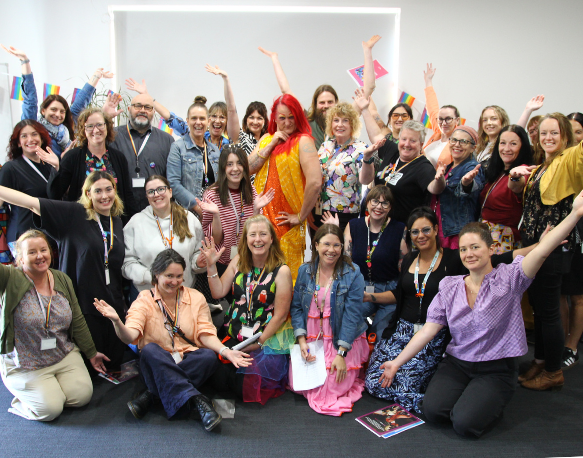
On Tuesday 31 March, the Centre for Non-violence (CNV) proudly marked two significant milestones: the official launch of our Rainbow Tick Accreditation journey, and recognition of Transgender Day of Visibility. Transgender Day of Visibility is an annual international celebration of trans pride and awareness, recognising transgender, gender diverse and non-binary experiences and achievements.

CNV hosted an internal event with staff and guest speaker StarLady from Zoe Belle Gender Collective, a local trans and gender diverse, advocacy led organisation. The event marked the beginning of our formal commitment to deepening safe, affirming, and inclusive practice for LGBTIQ+ clients, staff, and stakeholders across all areas of our work.

Rainbow Tick is a nationally recognised accreditation framework that supports health and human service organisations to demonstrate they are culturally safe, inclusive, and affirming for LGBTIQ+ communities. This includes the people who access our services, our partners and external stakeholders, and our staff.

We recognise that LGBTIQ+ communities experience disproportionately poorer health outcomes, as well as higher rates of intimate partner, sexual, and family violence, and ongoing discrimination. As a feminist, value s led organisation, undertaking Rainbow Tick Accreditation aligns strongly with our commitment to challenging systemic barriers and affirming the identities, dignity, and rights of marginalised communities.

Our Diversity and Inclusion Statement affirms that:

“CNV is an inclusive organisation, which ensures cultural safety, diversity, social justice, inclusion and equity is reflected in all we do.”

Commencing our Rainbow Tick journey is a visible and accountable action toward fulfilling this commitment.

This work has been strongly supported by CNV staff over several years, and we are committed to progressing the accreditation process respectfully, inclusively, and with clear purpose. We look forward to continuing this journey alongside LGBTIQ+ communities, advocates, and allies, as we strengthen our services and organisational culture.

Starlady wearing bright orange colours speaking in front of rainbow flags

Supporting victim survivors to stay in their homes

Supporting victim survivors to stay in their homes

We unpack how a key family violence program, the Personal Safety Initiative (PSI), supports victim survivors to remain safely in their homes.
15 February 2026

For the past eight years, Gen has worked behind the scenes to help victim survivors of family violence stay safely in their own homes. As the Personal Safety Initiative Coordinator at the Centre for Non-Violence, her role sits at the intersection of safety, technology and justice: supporting victim survivors while holding people using violence to account.

The Personal Safety Initiative (PSI) is a non-crisis program that uses safety and security measures to help victim survivors to remain safely at home, deter breaches of intervention orders and support evidence collection to hold perpetrators accountable. Rather than expecting victim survivors to relocate, the PSI focuses on strengthening safety and security where victim survivors live. “Women shouldn’t have to leave their homes or their communities,” Gen says. “They should be able to stay, especially when they’re caring for children.”

Gen coordinates a highly specialised response. This can include installing CCTV and sensor lighting, coordinating bug sweeps of homes and vehicles, checking for tracking devices or dash cams, and arranging forensic sweeps of mobile phones for spyware. Importantly, the technology used must meet a high evidentiary standard. “The goal is accountability,” Gen explains. “The main focus is to capture evidence that can be used in court if an intervention order is breached.”

But the PSI is not about installing cameras by default. Assessing eligibility and suitability is a critical part of Gen’s role. She works closely with family violence practice workers to identify the specific risks each victim survivor is facing and whether PSI would meaningfully reduce those risks. “If a person using violence doesn’t know where the victim survivor is living, cameras might not make sense,” she says. “But if there’s a pattern of him tracking her down, then we think more broadly about what could help.”

Strict criteria apply. Generally, the victim survivor and person using violence cannot be living together, and a full exclusion intervention order must be in place. There are limited exceptions, where an intervention order could escalate risk. “The victim survivor also has to be prepared to report breaches,” Gen notes. “That’s not easy, and it’s something we talk through carefully.”

Gen is clear that cameras alone do not keep women safe. PSI always includes a security assessment of the home, along with safety and support planning. However, the presence of high-quality security measures can deter breaches, particularly when the person using violence would have their employment or freedom seriously affected through criminal convictions.

Since PSI began in 2017, Gen has seen the program evolve alongside broader system changes. The current housing crisis has made it much harder for women and children to relocate, increasing demand for support to remain safely at home. New funding is currently being trialled, allowing faster access to smaller interventions, such as phone or vehicle sweeps, without the full PSI process.

“It’s incredibly empowering for women to take control of their homes,” Gen says. “Many never thought they’d be able to do that.” Still, the injustice lingers. “It makes me angry when women and children experience such upheaval, but it’s happening far less often. It’s more common for the person using violence to be excluded from the home. This used to be the exception rather than the norm and it’s great to see this progress.”

Reach out for support today

At CNV, we're here to help. You can call, phone or simply drop in.

The Birth of Diversity Dialogues – How Silence Sparked a Series

The Birth of Diversity Dialogues

How Silence Sparked a Series
3 December 2025

CNV's Family Violence and Disability Practice Lead (FVDPL), Talitha Travers, developed the 12-part webinar series, Diversity Dialogues: Unpacking Family Violence & Disability to build confidence and capability in responding to disability and family violence. She reflects on the intersection of disability and family violence and how the webinar series came to life.

What began as silence, became the catalyst for regional transformation; the power of a quiet moment led us to reshape how we grow, learn and lead alongside the disability community.

The idea was first born when no questions were asked in the Q&A section of a presentation on the intersection of family violence and disability. We knew the practitioners had questions, but why weren’t they asking? Confidence. The Diversity Dialogues webinar series was an opportunity to confront the silence and increase practitioner confidence in supporting people with a disability.

Violence against women and girls is driven by gender inequality, and ableism is the social context which gives rise to and supports violence against people with disabilities. The compounding nature of these factors creates the intersection between gender inequality and ableism and drives violence against women and girls with disabilities.[1]

One in four women have experienced intimate partner violence in Australia; and women with disability are two to three times more likely to experience intimate partner violence since the age of 15, compared to women without a disability. Due to limitations in data collection methods, the rates of violence experienced by women and girls with a disability are likely to be much higher than the available data indicates.[2]

Building workforce capability is key to improving responses and preventing violence against women and children with disabilities, including addressing unconscious bias and ableism. Increasing staff capability also requires amplifying practitioner confidence, to create long-term, attitudinal and cultural change. Therefore, our priority is to increase practitioner confidence whilst simultaneously addressing practice and system-related issues and barriers.

The Diversity Dialogues series supported practitioners across a range of fields and backgrounds. A Family Services practitioner reflected that, “What made this webinar, and the broader Diversity Dialogues series especially memorable was the variety of guest speakers, including those with lived experience, disabilities, and professional expertise. Their diverse perspectives brought depth and authenticity to the discussions, making the content not only informative but deeply engaging. This blend of voices created a rich learning environment that encouraged reflection and challenged conventional thinking in a way that felt both relevant and inspiring. ”

At a systems level, Dr Kylie Cocking, Project Officer Quality, Systems & Development told us “The series highlighted the role we can all play in closing the gaps for people with disability who experience family violence.”

CNV compiled resources from the 12-part webinar series and commissioned artwork for the cover, designed by Tanya Higgins, a local artist who is a victim survivor living with trauma-induced schizophrenia. We are now the proud owners of this artwork that hangs in CNV’s Pall Mall office for all to see.

When speaking with Tanya, the journey she went on while creating the artwork as helping her let go and supporting her to tell her story. Tanya is passionate about her artwork helping to show other victim survivors that there is good in the world, despite what they are experiencing currently and empowering them to imagine what a life of safety could look like.

Throughout this process, Tanya has been supported by local art therapist, Melissa Harrington from Scribbles Allied Therapy and reflects on how transformative art therapy has been for her healing journey. Tanya shares that she was not able to find the rights words to tell her story through the mainstream clinical approach, and reinforces that for her and many others alike, physical safety did not equate to feeling safe. Tanya talks about how different her life and healing journey would have looked if she found art therapy 20 years ago. Tanya credits the process of art therapy to the reclaiming of her life.

CNV recognised the opportunity and importance of commissioning an artist with a disability, specifically as a non-disability organisation and our responsibility as a specialist family violence service, to acknowledge the high prevalence of violence against women and girls with disabilities. We are proud to showcase Tanya’s artwork and express our gratitude for the privilege of her trusting us with her story and artwork.

The theme for International Day of People with Disability 2025 is ‘Fostering disability-inclusive societies for advancing social progress’. [3]

Fostering disability-inclusive societies means creating communities, systems, and services where people with disabilities are valued, respected and fully able to participate in all aspects of life. This involves recognising that people with disabilities experience amplified forms of violence that target their disabilities, barriers to safety, and exclusion from mainstream responses.

Manager of the Community Inclusion and Women’s Empowerment program at Women with Disabilities Victoria, and Chair of the Loddon Family Violence Disability Practice Leader Steering Committee, Liz Wright, reminds us why inclusion is so important.

“Because of the over representation and diversity of women with disabilities, there is a need for active inclusion and to challenge the status quo, through storytelling, listening to the disability community and responding in a more nuanced way to prevent violence and create better long-term outcomes for women and gender diverse people,” says Liz.

By raising this profile, CNV helps build a society where inclusion and safety are mutually reinforcing, where preventing and responding to family violence become part of a larger movement toward justice, equality, collective wellbeing, and participation are realised for everyone.


[1] Our Watch, & Women with Disabilities Victoria. (2022). Changing the landscape: A national resource to prevent violence against women and girls with disabilities. Melbourne, Australia: Our Watch.

[2] Ibid.

[3] International Day of Persons with Disabilities – 3 December | Division for Inclusive Social Development (DISD). (2024, December 3). https://social.desa.un.org/issues/disability/international-day-of-persons-with-disabilities-3-december

Breaking the Silence by Tanya Higgins

Tanya Higgins is a local Bendigo artist and victim survivor living with trauma induced schizophrenia, a part of her experience that shapes how she moves through the world.

The artwork, “Breaking the Silence” was a journey of expression, emerging from a gentle, supportive space where Tanya was invited to create without pressure or expectation.

The Diversity Dialogues webinar series

12
Sessions
March 2024 – April 2025
971
Registrations
283
Content views

Listen Up: Understanding young people’s experiences of family and gender-based violence

Listen Up: Understanding young people’s experiences of family and gender-based violence

Bendigo Senior Secondary College Wellbeing Week: Annual Agency Expo, 15th September 2025

“I hope the next generation has tools to better understand differences and awareness about inequities and where they exist. They’re not raised to be colour blind, but colour brave, they see gender as a spectrum, and they want equality for all”

Julie Kratz


26 November 2025

On a sunny yet wildly windy day in Bendigo, a range of local organisations dedicated to community safety and wellbeing gathered in the Ulumbarra Piazza for the ‘agency expo’ as part of the Bendigo Senior Secondary College (BSSC)’s annual Wellbeing Week.

This event is a highlight on our calendar as it is a wonderful opportunity for the team to meet and greet with students and teachers alike and discuss all things prevention and gender and social equality.

CNV hosted an interactive activity inviting students aged 15-18 to consider what they regard as ‘green flag’ or ‘red flag’ behaviour in relationships. Students were asked to consider a diverse range of relationships including but not limited to:

  • Romantic
  • Family (including parents, grandparents, siblings etc)
  • Family-like, family of choice
  • Kin
  • Friends
  • Carers/Guardians

CNV staff were blown away by the response: with over 50 student contributions to our activity and numerous, diverse conversations with many more young people and teachers alike, we were able to connect their understandings of respectful relationships with broader concepts around gender equality and drivers of violence.

The themes that consistently showed up included:

  • Importance of feeling seen, heard and recognised as their own person
  • Importance of setting and respecting boundaries
  • Importance of clear communication – (a crucial principle in D&I to ensure everyone feels respect, heard and understood)

These incredible insights sit against a backdrop where young people are increasingly exposed to a disturbing rise in the normalisation of misogynist attitudes and behaviours.  While misogyny has always been present – the rise of accessibility to misogynistic influencers, such as Andrew Tate – is changing the landscape, particularly for young people.

The rise in tech-facilitated abuse, online grooming and exposure has meant that children and young people are increasingly exposed to violent and harmful online content, including messaging which reinforces rigid stereotypes and gender roles.[1] The expectation then put on young boys and men to hold and adhere to performative heteronormative and toxic presentations of masculinity has been having devastating social and relationship impacts, particularly within schools.

Researchers are reporting disturbingly high increases in sexist, misogynistic behaviours amongst teen boys, with female students reporting in large numbers that they are increasingly and rapidly feeling unsafe at school. Equally, teachers across the state are noticing that female students are quieter in classrooms and no longer speaking up as they used to.[2] The change is visible. And it’s not just contained to the classroom.

According to Hayley Boxall a criminologist at the Australian National University, ‘[s]ervice providers are getting younger referrals and seeing a disturbing rise in peer-on-peer sexual violence’.[3]

Capturing the voices and experiences of young people is critical in deepening our understanding and informing our prevention and response approaches. As service providers working in prevention and response, it is more important than ever before that we listen up to better understand young people’s experiences of and understandings of family and gendered violence and importantly how critical respect is in ending violence.

It was an immense privilege to hear from the students at BSSC and see firsthand their commitment to raising the profile of respectful relationships.


[1] Over H, Bunce C, Baggaley J, Zendle D. ‘Understanding the influence of online misogyny in schools from the perspective of teachers’, in PLOSone, Vol.20(2):e0299339. doi: 10.1371/journal.pone.0299339. Available from: https://pmc.ncbi.nlm.nih.gov/articles/PMC11864523/ [Accessed: 25 November 2025]

[2] Victorian Women’s Trust 2024. ‘Malevolent Influence: Schools and the Shadow of Andrew Tate’, webinar, 1 May.

[3] Perez L 2025. ‘Teen boys, misogyny, and violence – could Adolescence be Australia’s wake-up call?, article in, ANU Reporter, 24 April. Available from: https://cass.anu.edu.au/news/teen-boys-misogyny-and-violence-could-adolescence-be-australias-wake-call [accessed: 24 November 2025]

Sign up to our newsletter.

Receive our latest news, including sector resources and events, and hear how we're supporting our community.

When Home Isn’t Safe: Family Violence and the Increased Risk of Homelessness for Victim Survivors

When Home Isn’t Safe

Family Violence and the Increased Risk of Homelessness for Victim Survivors
27 August 2025

Homelessness Week was a pertinent reminder to listen to the voices of victim survivors of family violence, when calling for state and federal governments to increase investment in social housing.

Family violence is the leading cause of homelessness in Australia; and with soaring rents, low vacancy rates, interest rate rises and housing affordability at an all-time low, we know the situation is only getting harder for women and children seeking safety, wellbeing and a life free from violence.

The choice to stay in a violent relationship, or face homelessness is no choice at all. Yet for people experiencing family violence, it is often one they are forced to make.

Nationally, two in five people facing housing insecurity and requiring specialist housing support were experiencing family violence: 90 per cent of those seeking specialist homelessness support services were women and children.[1]

At CNV, our clients consistently tell us that one of the driving factors that inform their decision-making on whether to leave or stay is the risk of homelessness. In 2023-2024, 40 per cent of CNV clients identified housing as a safety priority.[2]

It is simply unacceptable that our governments have been unwilling to prioritise the investment and legislative needed to keep families in safe and affordable housing.

CNV alone provided 16,944 nights of crisis and emergency accommodation to victim survivors (including children) in 2023-2024. We know that demand is increasing and has significantly outpaced availability of crisis and emergency accommodation.

It is inexcusable that specialist family violence and housing services are forced to turn victim survivors away, including children, from desperately needed housing support, because there is nowhere for them to go.

It is also lamentable that when we speak of ‘crisis accommodation’, what it often means are motel rooms.  With little option but to place those escaping family violence in small, often cramped motel rooms, with little to no access to cooking facilities or any safe spaces for children to play.

Victim survivors require better, and more targeted responses to crisis, emergency and transitional housing. The use of hotels and motels is not a viable, safe or financially sustainable option – and the sector’s over-reliance on the private hotel and motel industry to provide emergency accommodation to some of our most vulnerable community members is simply not appropriate.

Within this context, we must address the gendered drivers of violence against women and girls, children and diverse communities through effective policy and project development.

This requires significant systems change in addressing racism and discrimination. We know that our legal and government systems are not always working towards equality, and to reduce the number of people experiencing or at risk of homelessness, we must begin to dismantle barriers to equality and justice through targeted legislative reform.

We know what is needed to improve safety and give victim survivors a real choice to safely leave a violent relationship. At a minimum, this includes:

  • At least 83,000 new dwellings for victim survivors over the next 25 years in Victoria;
  • Increased investment in specialist family violence and homelessness services;
  • An immediate increase to purpose-built crisis accommodation right across the country;
  • Targeted prevention to reduce the risk of homelessness for people who are more vulnerable to becoming homeless.

We call on all levels of government to address major drivers of homelessness across the population, including racism and discrimination, the adequacy and security of income support, people’s access to affordable housing and importantly safety and wellbeing.

A safe, affordable, and decent home for our clients is the foundation for a safe, nourished life free from family violence. We know that an absence of safe, affordable housing options increases the likelihood of victim survivors remaining with a violent perpetrator.

A choice between facing homelessness or risking a return to the home of the perpetrator is no choice at all.

Every person should have the right to a safe place to call home.

[1] Australian Institute of Health and Welfare. (2025). Specialist homelessness services annual report 2023–24. Retrieved from https://www.aihw.gov.au/reports/homelessness-services/specialist-homelessness-services-annual-report [accessed: 13 August 2025]

[2] Centre for Non-Violence. (2024). Annual Report 2023-2024. Retrieved from https://www.cnv.org.au/about/publications/ [accessed 13 August 2025]

Sign up to our newsletter.

Receive our latest news, including sector resources and events, and hear how we're supporting our community.

Making children visible in the picture of family violence

Making children visible in the picture of family violence

At CNV, we recognise that children are victim survivors of family violence in their own right.
26 August 2025

For far too long, children and young people have been the invisible victims of family violence: their experiences often relegated to the shadows, as silent witnesses. However, there is an urgent need to recognise that children don’t just witness family violence, they experience it too. And their experiences of family violence are unique and require tailored support and protection.

Children are victim survivors in their own right. We know that family violence has significant impacts on children, young people and babies, even before they are born.

The changing paradigm echoes new research and understanding that places children at the forefront of family violence, rather than the periphery. We now understand so much more about the profound impacts of violence on children and young people than we ever have before. Importantly, we know that these impacts extend far beyond the immediate harm, and can include long-term effects on relationships, education, health, and wellbeing.

The most recent crime statistics (2023-2024) for Greater Bendigo show that children were present in 36% of family violence incidents attended by police. Of the 2,589 family violence incidents that police attended, there were children present at 932 of these.  We also note that family violence continues to be significantly unreported, and these figures only represent incidents where police were present.[1]

The signs are often subtle: clinginess in a toddler, aggression in a school-aged child, anxiety in a teen. These behaviours may be misunderstood or dismissed as “just a phase,” but for children experiencing family violence, they are symptoms of deep, invisible wounds. A baby who cannot sleep, a child who lashes out at classmates, a teenager who disengages from school—these are not isolated behavioural issues. They are often desperate expressions of trauma.

Family violence doesn’t only happen in the shadows. Its ripple effects can be found in classrooms, in doctors’ offices, and in playgrounds. The impacts on children are not just emotional or social, they are physical, neurological, and long-lasting. Research shows that trauma from family violence can disrupt brain development and trigger a chronic stress response in children. This can impair their ability to learn, manage emotions, and build healthy relationships, with consequences that can stretch across their lifespan.[2]

Importantly, the presence of family violence in a child’s life doesn’t always look like bruises or shouting. It can be the gnawing tension of unpredictable moods, the absence of a parent too emotionally depleted to engage, or the fear of becoming the next target. A child may be used as a pawn or blamed as a cause. Even if they are not the direct focus of abuse, children absorb its impacts: through missed milestones, illness, self-harm, or risky behaviours. These are not acts of rebellion.

They are calls for help.

ANROWS CEO Tessa Boyd has stated:

“Too often, children and young people’s experiences of violence are invisible in policy and practice. This guide reminds us that they are not just ‘witnesses’ but victims and survivors in their own right. Their voices, strengths, and needs must shape the systems designed to protect them. Ending violence requires us all to commit to policies that are informed by the lived realities of children and young people experiencing violence in their homes.”[3] Yet despite growing evidence, our systems are still catching up. The Victorian Royal Commission into Family Violence revealed that around 80% of child protection cases involve family violence, a figure that is now believed to be even higher. This isn’t just a child protection issue, it’s a community crisis. And it demands that we see children not as secondary victims, but as victim survivors in their own right.

To truly support these children, we must centre their voices and experiences in every aspect of our response. That means going beyond blanket solutions. It requires recognition that children and young people experience unique risk factors.

Dr Georgena Dimopoulos, a leading socio-legal scholar on children’s rights and participation in family law, says “There is no ‘one size fits all’.”[4] A child’s safety isn’t just about locks on doors, it’s about emotional stability, routine, connection, and hope. Children must be given the chance to tell their stories, to identify what makes them feel safe, and to help shape the systems designed to protect them.

What to do – how you can help:

  • Listen – if a child makes a disclosure to you listen to what they are saying.   Hearing a child’s voice is important in supporting them through family violence.
  • Observe/take notes – if you have concerns around a child, take notes of this, document your concerns – this can help if you need to make a report or a referral for a child
  • Act –
  • Partner – even if you’ve made a report or referral for a family, it is important that you continue to provide both the child and their protective parent with support.  This could include, safety planning, emotional support, check ins etc.


[1] Crime Statistics Agency, December 2024, Family Violence Dashboard, https://www.crimestatistics.vic.gov.au/family-violence-data/family-violence-dashboard

[2] Safe and Equal, Supporting children and young people, Retrieved 5 August 2025,

https://safeandequal.org.au/working-in-family-violence/tailored-inclusive-support/children-and-young-people/

[3] Gillfeather-Spetere, S., & Watson, A. (2024). In their own right: Actions to improve children and young people’s safety from domestic, family and sexual violence (ANROWS Insights, 01/2024). ANROWS.

[4] Southern Cross University, August 2024, Victoria’s family violence system is failing children: new report, Retrieved 5 August 2025, https://www.scu.edu.au/news/2024/family-violence-system-in-victoria/

Sign up to our newsletter.

Receive our latest news, including sector resources and events, and hear how we're supporting our community.

Safety, Accountability, and Innovation: CNV’s Journey to Integrated Family Violence Support

Safety, Accountability, and Innovation

CNV’s Journey to Integrated Family Violence Support
25 August 2025

At the heart of CNV’s work is an integrated practice model that brings together teams of professionals to deliver coordinated programs to women, men, children, and young people impacted by family violence. The model ensures a dual focus: prioritising safety for victim survivors, alongside visibility and accountability for people who use violence.

Our integrated teams work collaboratively to assess risk and tailor support using the MARAM framework: Victoria’s best practice model for family violence risk assessment and management. Within each team, specialists share critical information, plan jointly, and provide individualised responses to meet the complex needs of those affected by violence.  

The seeds of this integrated model were sown in 2005 when CNV began delivering men’s behaviour change programs. Around that time, we were considering how integrated responses could support improved outcomes for victim survivors and hold those using violence accountable. We recognised that fragmented services often failed to deliver lasting safety or accountability. This marked the start of a shift towards more connected service responses.

We undertook study tours abroad to explore international best practice. In the US, the Duluth Integrated Model offered valuable insights into coordinated perpetrator interventions. In the Netherlands, we observed a team-based approach where practitioners worked collectively with entire families: victim survivors (adults and children) to deliver coordinated and holistic support and response.   These international learnings inspired us to take bold steps toward full integration.

By 2009, CNV began implementing an integrated model, officially finalising it by 2011-2012. This approach was the first of its kind in Victoria, and possibly Australia. We approached the transition cautiously, due to limitations in information sharing laws and sector concerns, and developed strict protocols to manage safety and risk responsibly. Despite early scepticism, we proved that integrated, accountable, and safe systems could be developed and implemented effectively.

The late Hon. Fiona Richardson MP, then Minister for the Prevention of Family Violence, visited CNV during this period. Deeply impressed, she championed the model as the “gold star” approach to meeting the needs of victim survivors. The Royal Commission into Family Violence heard repeatedly about the need for stronger coordination and integration of systems and recommended the establishment of The Orange Door network: statewide safety and support hubs.  The hubs echo our integrated philosophy by bringing together child and family services, specialist family violence support, Aboriginal services, and child protection.

Today, the integrated practice model continues to reflect our founding vision, and we are continually working to strengthen and improve our approach and impact. The development of the model is a powerful example of what is possible with innovation, collaboration, and a deep commitment to safety and accountability.

Sign up to our newsletter.

Receive our latest news, including sector resources and events, and hear how we're supporting our community.

Working together to prevent violence: the launch of the Loddon Consortium’s Strategic Plan 2025-2028

Working together to prevent violence

The launch of the Loddon Consortium's Strategic Plan 2025-2028
11 June 2025

This Friday, 13 June 2025 the Loddon Consortium for Gender Equality and Violence Prevention (the Consortium) will officially launch its 3-year Strategic Plan, at Mackenzie Quarters in Bendigo. Bringing together staff, partners and stakeholders, the launch will set the scene for how specialist services are working together to deliver better outcomes for rural and regional communities.

The Consortium is a partnership between five specialist gender-based violence organisations across the Loddon area:

  • Centre for Non-Violence (CNV)
  • Annie North Women’s Refuge
  • Centre Against Sexual Assault Central Victoria (CASACV)
  • Women’s Health Loddon Mallee
  • Sunbury and Cobaw Community Health.

The Consortium was established in 2004, bringing together services working in the specialist gendered violence sectors. The partnership is the only Consortium in Victoria that provides integrated regional programs and services for victim survivors of family and sexual violence, men who use violence towards family members, and works to prevent gendered violence. The Consortium is united in its commitment to working and advocating for gender and social equality and a community free of violence.

Some of the key achievements of the Consortium over the last two decades include the innovative development of integrated services for victim survivors of family and sexual violence and men who use violence towards family members. This includes integrated after-hours response programs (family and sexual violence) and shared intake for the Safe, Thriving and Connected therapeutic recovery programs and services for victim survivors, including children.

The Consortium also has representation on key alliances and networks in the Loddon region and statewide, continuously advocating for a specialist family and sexual violence informed policy and legislative decision making. It is the strategic vision of the Consortium’s work that communities, right across the Loddon area, are able to have safe and accessible services to help prevent, respond to and recover from gendered, family and sexual violence, and to ensure that the voices and experiences of regional and rural communities are listened to when decisions are being made at the State and Federal level.

The new strategic plan is the culmination of two decades of learning and leadership of specialist services and brings an even greater focus on the importance of working together to achieve the change we seek to see: everyone in our community has the right to live a life without fear or violence. The Consortium are excited to launch the Strategic Plan 2025-2028 and look forward to setting the scene for another 20 years of successful collaboration, partnership and advocacy.

If you, or someone you know is experiencing family or sexual violence, or you are concerned about your behaviour towards your family, help is available.

In any emergency call: 000

Centre for Non-Violence: (free call) 1800 884 292

Centre Against Sexual Assault Central Victoria: (03) 5441 0431

The Orange Door Loddon: (free call) 1800 512 359

Safe Steps: (24/7 statewide service) 1800 015 188

Sexual Assault Crisis Line (24/7 statewide service) 1800 806 292


END MEDIA RELEASE.

For any media enquiries please contact:

Dr Clare Shamier, Head of Business Development and Advocacy, Centre for Non-Violence:

e). [email protected]

m). 0488 281 528

Our reconciliation journey at CNV

Our reconciliation journey at CNV

Reconciliation is a journey of many steps, taken individually and together each day.
27 May 2025

National Reconciliation Week (NRW) runs from May 27 to June 3 each year. These dates commemorate two significant milestones in the journey to reconciliation: the 1967 Referendum and the High Court Mabo decision. NRW is a time to reflect on the meaning of Reconciliation, acknowledging and understanding our shared histories, cultures and achievements, and respecting our personal and collective roles in the process of achieving Reconciliation.

At CNV, we have been taking small but intentional steps on this path for some time. In 2024, we published our first Innovate Reconciliation Action Plan (RAP), which outlines the next chapter of this journey.

Less than a year since our RAP was launched, some key projects and changes are already well underway. Our internal advisory committee – Ngladurrung Yanagyu – meaning walking together in Djaara language, was established early on to bring staff along the journey. This is crucial to bringing employees up to speed and moving from staff participation to endorsement and ownership.

One of the first actions was amending our Enterprise Bargaining Agreement so employees can opt to work on Invasion Day (January 26). This symbolic change enables staff to take a different day off in lieu, which shifts the focus from a day of celebration, to one of mourning and reflection, 32 staff opted to utilise this provision in the first year it was enacted.

A more long-term focus has been building and nurturing a culture of learning and self-reflection. This is a key part of staff orientation and carries through into ongoing systems, communications and external partnerships. The main focus is to educate staff, encourage self-reflection, and address underlying racism.

An important driver in these changes has been support at all levels of the organisation, with the work very much driven by CNV’s Board of Management. The Board developed and endorsed CNV’s Commitment to First Nations Peoples in May 2023, and are strong advocates for the RAP.

Margaret Augerinos, CEO of CNV, highlights how shifting workplace culture and attitudes is cornerstone in the RAP.

“A RAP is not just in the doing, it’s the changing of organisational culture so that we don’t have to think about these things, so that it’s already embedded in policies and processes,” she says.

Another key focus is building self-determination of Aboriginal and Torres Strait Islander peoples. Wherever possible, we are engaging with First Nations owned businesses, from catering to printing and everything in between. A directory has been established to highlight key opportunities to work with local Aboriginal businesses and suppliers.

CNV participated in the Workplace Reconciliation Barometer (WRB) Survey. A biennial, nation-wide survey that looks at the attitudes towards and perceptions of reconciliation among employees of RAP organisations. Overall, we had positive results and important feedback on how to drive our reconciliation journey. The findings showed our staff’s commitment to participating in truth-telling activities (92%), 100% had participated in a National Reconciliation Event in 2024 and 68% view CNV has genuine and strong commitment towards reconciliation. This has been supported by CNV taking steps to create a more welcoming and culturally safe environment for Aboriginal and Torres Strait Islander peoples, whilst also providing a space that supports staff learning, engagement and capacity building. This includes purchasing maps of First Nations lands and creating acknowledgement of country cards.

Moving forward we will continue to focus on building relationships with external stakeholders who are allies in reconciliation and community. This helps us to listen to and be led by First Nations voices, which is a crucial part of reconciliation. CNV a member of the Bendigo Reconciliation and Allyship Committee and has developed an action plan to drive key actions in the region at an individual, community and organisational level over the next 5 years.

Sign up to our newsletter.

Receive our latest news, including sector resources and events, and hear how we're supporting our community.

Coercive Control: An Endemic Tactic of Family Violence

Coercive Control: An Endemic Tactic of Family Violence

Recent dialogues and media attention have again placed an important spotlight on the dangers and devastating impacts of coercive control.
21 May 2025

This is a welcome opportunity to highlight the importance of understanding, recognising and responding to this insidious and dangerous tactic.

Coercive control is a repeated pattern of abusive, manipulating and intimidating behaviours and almost always underpins the dynamics of family and domestic violence. Perpetrators use coercive and controlling tactics and behaviours most often within intimate partner relationships, with current and former partners and within broader family relationships, including against children and elders.

Coercive control is a largely gendered issue and while people of all genders can perpetrate or experience coercive control, it is overwhelmingly perpetrated by cisgender men against cisgender and transgender women.

Coercive control is a range of deliberate tactics, with perpetrators using subtle, underhanded and manipulative behaviours that directly target victim survivors. These tactics are used in a methodical and deliberate way, and include physical and non-physical behaviours.

These tactics and behaviours may only be recognised and visible to perpetrators and victim survivors: they are often invisible or unnoticed by others. These behaviours intimidate, humiliate and coerce, causing fear, hurt, isolation and limits to victim survivors’ freedom of choice.

Examples of coercive control include gestures, looks, jealousy, social isolation, put downs, threats to harm, financial, legal and systems abuse. You may see or notice subtle changes over time from the impacts of coercive control, with victim survivors having reduced confidence, changing their behaviour, limiting and restricting their movements and activities or isolating themselves from family and friends.

Impacts

Coercive control is serious. It can cause immediate and long-term harm. The impacts often get worse over time and continue after the relationship has ended. Separation and relationship breakdown can be the most dangerous time for victim survivors. Coercive control can impact every part of a person’s life including their mental and physical health, relationships, employment and financial security. The abuse can also impact on a person’s sense of safety, their independence, and self-esteem – making them feel trapped, powerless and alone.

We know coercive control is a defining feature of family violence and is present in most, if not all cases where family violence occurs. For example, of the 2,247 victim survivor risk and safety assessments that CNV conducted between July to December 2024, controlling behaviours were present in 83 per cent of cases. This behaviour, along with intersectional risk factors of perpetrator alcohol and drug misuse, stalking and jealousy are key evidence-based lethality and risk indicators. This is not an isolated issue. Extreme risk was identified in 43 per cent of the victim survivors’ assessments: with 10 or more evidence-based risk factors identified.

Supports

Seeking support and/or leaving an abusive relationship can be difficult and victim survivors may feel like it is impossible to leave due to the risks they are facing. But help is available.

CNV provides specialist integrated support to both victim survivors and perpetrators of family violence.

We assess the safety and risk of victim survivors and perpetrators, to provide responses that uphold safety and accountability and mobilise systems. We work collaboratively to address the needs of our clients.

If you or someone you know is experiencing family violence, contact us for advice and support. Alternatively, if you are supporting someone who is experiencing family violence you can refer them directly to our service.

Reach out for support today

At CNV, we're here to help. You can call, phone or simply drop in.