Federal Budget Submission: Fund the Sector, Save Lives

Federal Budget 2026

Fund the Sector. Recognise our Expertise. Together we can prevent the violence before it begins.
11 May 2026

On the eve of the Federal Budget, government has a critical opportunity to tackle the national crisis of men’s violence, and commit to an economy that prioritises the safety and wellbeing of women, children and diverse communities experiencing family violence.

As a front-line specialist family violence service, we work tirelessly with victim survivors and adults using violence to increase safety and wellbeing. Our innovative and evidence informed programs and services are making real, lasting and positive impacts for our clients.

But we are at crisis point.

It is no longer sustainable to do this work through drip-fed and ad-hoc funding streams and competitive short-term grant rounds. If we hope to achieve the much-needed outcomes set out in the National Plan to End Violence Against Women and Children 2022-2032 we need to see a Budget that prioritises specialist family violence prevention, response and recovery.

Support us do the work we need to do to end violence against women, children and diverse communities.

Download our full Federal Government pre-Budget Submission below.

Victorian State Budget: A lifeline is not a solution

Victorian State Budget 2026-2027 Announcement

A system surviving on a funding lifeline is not a solution. We need sustained, adequate investment so specialist services can meet demand, keep people safe, and deliver prevention and early intervention that stops violence before it escalates.
6 May 2026

Yesterday's budget announcement has seen the Victorian Government reinstate $100 million in funding for the family violence sector, but this is not the investment Victorians need. With cost-of-living pressures, inflation, a national housing and homelessness crisis, and unprecedented demand for specialist family violence services, reinstated funding does not keep pace. In real terms, it amounts to a cut.

The Victorian Government has reinstated $100 million in funding for the family violence sector.

But it comes as Victorians face a sharp cost-of-living squeeze, persistent inflation, a national housing and homelessness crisis, and unprecedented demand for specialist family violence services.

Put simply, reinstating $100 million is not new investment. In real terms, it amounts to a cut, leaving the sector unable to keep pace with rising demand. Even before this budget, services warned funding was falling far short—forcing programs to be scaled back and, devastatingly, victim survivors to be turned away.

That is not good enough.

Violence against women, children and diverse communities is a national crisis—and addressing it must be a priority for every state and territory government.

Specialist family violence services are on the front line. Yet year after year, we are expected to do more with less.

The Centre for Non-Violence supports thousands of people each year, including victim survivors (adults and children) and adults using violence, through evidence-informed programs and services. With over three decades of experience, we deliver tailored supports that we know work. It is devastating that instead of focusing on safety, wellbeing and better outcomes for our community, we are forced to stretch shrinking budgets—often by curbing or cutting programs.

While the budget speaks to community safety and faster responses to youth offending, it overlooks the prevention and early intervention work that specialist family violence services deliver every day. With proper investment, programs like CNV’s Making aMENds model could operate at full capacity. This father-focused program—first funded by the Department of Justice—combines intensive one-to-one therapeutic accountability with group work to help men using violence reflect, take responsibility and understand the impact of their behaviour on children, helping to break cycles of intergenerational trauma. Due to funding shortfalls and rising demand, the program can now offer only the Men’s Behaviour Change group component. This is what underfunding looks like—and services across Victoria are making decisions based on budgets, not on lives.

“If we’re serious about community safety, we must invest in the specialist services that prevent violence and respond early. Without proper funding, programs that work—like CNV’s Making aMENds—are scaled back, and decisions get made based on budgets, not on lives.” – Margaret Augerinos, CEO, Centre for Non-Violence


A woman is killed every week in Australia as a result of family violence. A child is killed every two weeks. Thousands more victim survivors are navigating daily safety within a system that is surviving on little more than a funding lifeline.

Failing to properly fund essential services fails every Victorian experiencing, or at risk of, family violence.

CNV launches Rainbow Tick journey on Transgender Day of Visibility

CNV launches Rainbow Tick journey

Today, on the International Day of Transgender Visibility, CNV has officially launched our journey towards Rainbow Tick accreditation.
31 March 2026

On Tuesday 31 March, the Centre for Non-violence (CNV) proudly marked two significant milestones: the official launch of our Rainbow Tick Accreditation journey, and recognition of Transgender Day of Visibility. Transgender Day of Visibility is an annual international celebration of trans pride and awareness, recognising transgender, gender diverse and non-binary experiences and achievements.

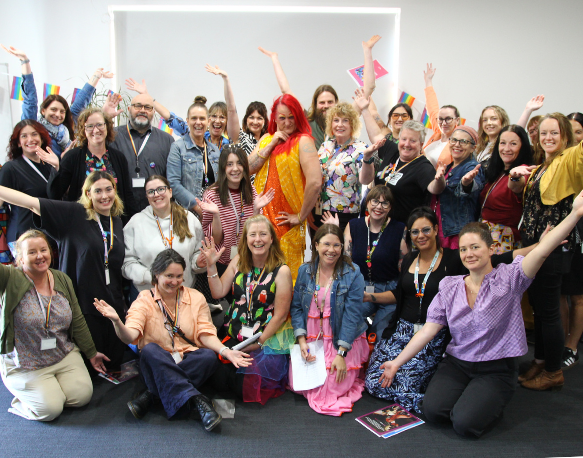
CNV hosted an internal event with staff and guest speaker StarLady from Zoe Belle Gender Collective, a local trans and gender diverse, advocacy led organisation. The event marked the beginning of our formal commitment to deepening safe, affirming, and inclusive practice for LGBTIQ+ clients, staff, and stakeholders across all areas of our work.

Rainbow Tick is a nationally recognised accreditation framework that supports health and human service organisations to demonstrate they are culturally safe, inclusive, and affirming for LGBTIQ+ communities. This includes the people who access our services, our partners and external stakeholders, and our staff.

We recognise that LGBTIQ+ communities experience disproportionately poorer health outcomes, as well as higher rates of intimate partner, sexual, and family violence, and ongoing discrimination. As a feminist, value s led organisation, undertaking Rainbow Tick Accreditation aligns strongly with our commitment to challenging systemic barriers and affirming the identities, dignity, and rights of marginalised communities.

Our Diversity and Inclusion Statement affirms that:

“CNV is an inclusive organisation, which ensures cultural safety, diversity, social justice, inclusion and equity is reflected in all we do.”

Commencing our Rainbow Tick journey is a visible and accountable action toward fulfilling this commitment.

This work has been strongly supported by CNV staff over several years, and we are committed to progressing the accreditation process respectfully, inclusively, and with clear purpose. We look forward to continuing this journey alongside LGBTIQ+ communities, advocates, and allies, as we strengthen our services and organisational culture.

Starlady wearing bright orange colours speaking in front of rainbow flags

International Women’s Day 2026

You can’t fix what ain’t broke:

The justice and legal system is working exactly as intended. This International Women’s Day, ‘Balancing the scales’ is about recognising that the scales were always intended to favour white men and demanding that transformative change is the only way forward.
8 March 2026

This International Women’s Day, we are calling on legal and justice systems to truly listen and respond to the lived experiences of victim survivors of family and sexual violence. These systems must undertake the necessary work to balance the scales so that women and children can safely and effectively seek justice and accountability.

Despite hard‑fought progress — including the Victorian Government’s recent decision to remove character references for people convicted of violent crimes after years of advocacy by survivors — the barriers to justice for women and children remain deeply entrenched. Women and girls still face extraordinary hurdles to being believed, let alone supported to pursue justice and accountability for the harm they have experienced.[1]

A crucial first step is reframing how we describe systemic abuse and sytems of oppression that cause harm. Phrases such as “falling through the cracks” obscure the reality of the barriers and inequalities experienced. They imply that the system works as intended, if only victim-survivors could navigate it correctly. But how can that be true when the very systems they turn to for protection were built in ways that deny fair and equitable access for women and girls?

Let’s be honest: no one “falls through the cracks.” The cracks are part of the design.

Deeply embedded biases, systemic oppression, and racism cannot be remedied with short-term fixes. Ensuring fair, inclusive, and accessible justice for every woman and girl requires confronting the uncomfortable truth that these systems were built to uphold the rights of men, predominantly cis, white men. They were constructed on a foundation of colonial oppression — and the consequences of that legacy are profound.

We see this most devastatingly for First Nations women and children. National data shows the over representation of Aboriginal and Torres Strait Islander women with one in three experiencing family and/or sexual violence at the hands of an intimate partner. First Nations women are also more likely to be mis-identified as the primary aggressor in the very systems purported to protect women from harm. This is despite the evidence: First Nations women are 34 times more likely to be hospitalised and 11 times more likely to die from violence than non-Indigenous women in Australia.[2] Family violence is also driving the rapidly increasing incarceration of First Nations women and is a leading cause of child removal into out of home care.[3]

These harms are not isolated incidents; they are part of a longstanding pattern of violence and systemic discrimination that has shaped First Nations experience since colonisation.

It remains true that the police force, the legal system and the judiciary are not specifically designed to deal with violence against women and children.[4]

Victim survivors’ attempts to seek safety and accountability are shaped by these broader forces of gender inequality, racism, and systemic bias. Engagement with the policing and legal system is all too often met with skepticism, delegitimisation, and disbelief — and the data reflects this troubling reality.[5]

A major 2025 Australian Law Reform Commission inquiry found that only 8% of women who are sexually assaulted report to police.[6] Of those reports, up to 85% never result in a charge, and even fewer proceed to court. Survivors frequently described their experience with police and courts as more traumatic than the violence itself, citing disbelief, poor communication, and re‑traumatisation during the process.

Last financial year, the vast majority of family violence incidents attended by police did not result in immediate protection for victim survivors or a Family Violence Safety Notice (FVSN).[7] In Greater Bendigo, more than 91% of incidents did not result in immediate protective action by police .[8] Increased police powers to apply immediate protection through FVSN, provides a stronger justice response and immediate safety — yet they are not being used.[9]

When this data is cross‑analysed with the type of violence reported, a pattern emerges: risk is too often unrecognised when physical or sexual violence is not present. Emotional and verbal abuse — along with often invisible tactics are patterns of coercive control and the strongest predictor of lethality in family violence homicides — making up more than 70% of police ‑attended incidents.[10]

Similarly, when victim-survivors themselves apply for Family Violence Intervention Orders (FVIOs), fewer than half are successfully granted, compared with just over 80% when police make the application.[11] This raises critical questions not only about why victim survivors are disbelieved when they seek protection, but also why perpetrators are believed and what the threshold for risk is — especially in a context where policy and legislation clearly identify family violence as a gendered crime.[12]

Systems harm extends far beyond policing and judicial responses to family and sexual violence. It is often realised through weaponisation by the perpetrator through what is known as ‘systems abuse’ — another tactic of coercive control. It is the deliberate misuse of government systems such as Child Support, Child Protection, and Family Law to intimidate, threaten, and harm victim-survivors.[13] It is pervasive, particularly within the Family Court where the legal system continues to disbelieve women and validate abusers.[14]

Each year, around 22,000 families navigate the Federal Circuit and Family Court system for parenting and property matters. In 2022–23, more than 84% of cases involved allegations of family violence, including risks to children.[15] Yet the Family Court continues to assert that it is not part of a family violence response — even as it routinely sidelines the voices of children, young people, and mothers, including in cases involving allegations of child abuse and child sexual abuse.[16]

Research by Death J et al. (2019) highlights that the Family Court has a troubling pattern of characterising mothers as vindictive or malicious when they raise concerns about abuse, rather than recognising potential harm or risk to children.[17]

There can be no justice where inequality persists. And there can be no accountability where systems abuse is enabled — or indeed replicated — by the system itself.

To balance the scales, we must first dismantle systems of inequality and oppression.

A transformed legal and justice system must recognise the equality and rights to justice and accountability of all people. It must prevent harm earlier and hold those who use violence accountable. Transformation is not only necessary — it is entirely possible.

It begins by believing women.

This International Women’s Day, we echo the call of ANROWS CEO, Tessa Boyd‑Caine:

“Inequality is built into systems […] it can be dismantled.”


Let’s get to work.


[1] See for example: Reeves E, Fitz-Gibbon K, Meyer S and Walklate S 2023. ‘Incredible Women: Legal Systems Abuse, Coercive Control and the Credibility of Victim-Survivors’, Violence Against Women, pp. 1-22

[2] Safe and Equal 2025. ‘Supporting Aboriginal and Torres Strait Islander People’. Available from: https://safeandequal.org.au/working-in-family-violence/tailored-inclusive-support/aboriginal-and-torres-strait-islander-people/#:~:text=3%20in%205%20Aboriginal%20and,by%20a%20male%20intimate%20partner. [Accessed: 5 February]

[3][3] See: Australian Human Rights Commission 2022. Wiyi Yani U Thangani (Women’s Voices): First Nations Women’s Safety Policy Forum Outcomes Report’, November 2022.

[4] See for example: National Plan to End Violence Against Women and Children 2022-2032. Available from: National Plan to End Violence against Women and Children 2022-2032 [accessed: 5 March 2026]

[5] Reeves E, Fitz-Gibbon K, Meyer S and Walklate S 2023. ‘Incredible Women: Legal Systems Abuse, Coercive Control and the Credibility of Victim-Survivors’, Violence Against Women, p. 2

[6] Australian Government 2025. ‘Safe, Informed, Supported: Reforming Justice Responses to Sexual Violence, Australian Law Reform Commission, January. Available from: alrc.gov.au/wp-content/uploads/2025/02/JRSV-Final-Report-Book-for-Web-final-20250211.pdf [accessed: 5 March 2026]

[7] For further information visit: Victorian Government 2026. ‘Family Violence Dashboard’. Available from: https://www.crimestatistics.vic.gov.au/family-violence-data/family-violence-dashboard [accessed: 4 March 2026]

[8] Victorian Government 2026. ‘Incident Details 2024-2025: Greater Bendigo’, available from: https://www.crimestatistics.vic.gov.au/family-violence-data/family-violence-dashboard [accessed: 4 March 2026]

[9] Victorian Government 2026. ‘Family Violence Safety Notices’, Victoria Legal Aid, 19 February. Available from: https://www.legalaid.vic.gov.au/family-violence-safety-notices [Accessed: 4 March 2026]

[10] Victorian Government 2026. ‘Incident Details 2024-2025: Greater Bendigo’, available from: https://www.crimestatistics.vic.gov.au/family-violence-data/family-violence-dashboard [accessed: 4 March 2026]

[11] Victorian Government 2026. ‘Family Violence Intervention Orders’, available from: https://www.crimestatistics.vic.gov.au/family-violence-data/family-violence-dashboard [Accessed: 4 March 2026]

[12] Reeves E, Fitz-Gibbon K, Meyer S and Walklate S 2023. ‘Incredible Women: Legal Systems Abuse, Coercive Control and the Credibility of Victim-Survivors’, Violence Against Women, p. 2

[13] DV Alert 2025. ‘Understanding Systems Abuse’, 25 August. Available from: https://www.dvalert.org.au/about/news-blog/understanding-systems-abuse#:~:text=Following%20the%20National%20Cabinet%20meeting,manipulated%20to%20further%20harm%20someone. [Accessed: 5 February 2026]

[14] Reeves E, Fitz-Gibbon K, Meyer S and Walklate S 2023. ‘Incredible Women: Legal Systems Abuse, Coercive Control and the Credibility of Victim-Survivors’, Violence Against Women, pp. 1-22

[15] Australian Government 2025. ‘Legal Systems’, Australian Institute of Health and Welfare. Available from: https://www.aihw.gov.au/family-domestic-and-sexual-violence/responses-and-outcomes/legal-systems#:~:text=Family%20courts,property%20orders%20in%202022%E2%80%9323.&text=A%20Notice%20of%20Child%20Abuse,the%20proceedings%20(FCFCOA%202024). [Accessed: 5 February 2026]

[16] Death J, Ferguson C and Burgess K 2019. ‘Parental alienation, coaching and the best interests of the child: Allegations of child sexual abuse in the Family Court of Australia’, in Child Abuse and Neglect, Vol.94. Available from: https://doi.org/10.1016/j.chiabu.2019.104045Get rights and content [Accessed: 5 February 2026]

[17] Ibid.

Looming Funding Cliff a Family Violence Catastrophe Waiting to Happen

Funding Cliff a Family Violence Catastrophe Waiting to Happen

CNV is calling on the Victorian Government to urgently address funding instability for specialist family violence services.
17 February 2026

As outlined in CNV’s submission to the Victorian State Budget 2026–27, the family violence sector is facing a state-level funding cut of $118 million, with critical funding due to lapse on 30 June 2026. The shortfall comes at a time when demand for family violence support is at an all-time high, compounded by the worsening housing crisis, placing women and children at even greater risk.

Cutting $118 million from the family violence sector while demand and risk are escalating is not just short-sighted, it is dangerous. Without urgent action to extend lapsing funding beyond 30 June 2026 and provide long-term, indexed investment, women and children escaping violence will face an impossible choice: homelessness or harm.

A choice between homelessness and violence is no choice at all.

The Centre for Non-Violence calls on the Victorian Government, and all levels of government to urgently:

  1. Restore and extend lapsing family violence funding beyond 30 June 2026 for family and gender-based violence primary prevention, early intervention, response and recovery
  2. Support children and young people as victim survivors in their own right
  3. Invest in safe, secure and affordable housing as a core family violence response

Family violence is the leading cause of homelessness in Australia.[i] Women and children experiencing violence make up a disproportionate share of those seeking homelessness support. In 2024-25, women accounted for around 75 per cent of adults seeking housing support as a result of family violence in Australia.[ii]

Australia’s rental crisis, characterised by skyrocketing rents, low vacancy rates and insufficient social and affordable housing, is not only pushing more people into homelessness, but also worsening family violence outcomes. As housing options shrink, specialist family violence services are spending an increasing amount of time navigating housing systems, while simultaneously facing funding uncertainty that threatens their ability to respond.

In 2024–25, CNV provided 16,422 nights of crisis and transitional accommodation to 294 women and children, with 67 nights being the average length of stay. For Aboriginal and Torres Strait Islander women and children, the average stay was 74 nights. Of the 294 women and children accommodated, 81 remained in crisis accommodation for up to six months due to the lack of secure, long-term housing options. These alarming figures highlight how the lack of safe, affordable housing, combined with shrinking service capacity, are undermining victim survivors’ ability to rebuild their lives.

Emergency and crisis accommodation, including motel rooms, are not adequate solutions. They are often unsafe, temporary and far from ideal for victim survivors recovering from trauma. Motels lack basic safety features, privacy and support services, and frequently force families into spaces that trigger further harm.

Without access to secure housing and adequately funded specialist support, escaping violence becomes a prolonged and dangerous ordeal. Too many women and children are left with no option but to remain in unsafe, temporary accommodation or return to violent homes simply because there is nowhere else to go.

For more than three decades, CNV has supported thousands of victim survivors to leave violent relationships and begin rebuilding their lives. But today’s housing market, marked by soaring rents, record-low vacancy rates and a severe shortage of social housing, means that leaving violence is no longer just about safety. It is about survival.

Between 70-90% of victim survivors supported by CNV say that housing affordability (soaring rental prices, mortgage stress) impacts their decision about when or whether they can safely leave. Many are forced to return to abusive relationships simply because they have nowhere else to go.

CNV’s Victorian State Budget submission makes clear that cutting $118 million from the family violence sector while demand and risk are escalating is not just short-sighted, it is dangerous.

Ending family violence requires more than crisis responses. It requires stable housing, secure funding, and the political will to ensure that every person has the right to safety, dignity and a place to call home.

ENDS

For all media enquiries, contact Rachel Dale, Media and Communications Lead at CNV via [email protected] or 0488 991 978.

[i] Australian Institute of Health and Welfare, (4 December 2025), Specialist homelessness services annual report 2024–25, retrieved 4 February 2026, https://www.aihw.gov.au/reports/homelessness-services/specialist-homelessness-services-annual-report/contents/clients-who-have-experienced-fdsv.

[ii] Ibid.

Supporting victim survivors to stay in their homes

Supporting victim survivors to stay in their homes

We unpack how a key family violence program, the Personal Safety Initiative (PSI), supports victim survivors to remain safely in their homes.
15 February 2026

For the past eight years, Gen has worked behind the scenes to help victim survivors of family violence stay safely in their own homes. As the Personal Safety Initiative Coordinator at the Centre for Non-Violence, her role sits at the intersection of safety, technology and justice: supporting victim survivors while holding people using violence to account.

The Personal Safety Initiative (PSI) is a non-crisis program that uses safety and security measures to help victim survivors to remain safely at home, deter breaches of intervention orders and support evidence collection to hold perpetrators accountable. Rather than expecting victim survivors to relocate, the PSI focuses on strengthening safety and security where victim survivors live. “Women shouldn’t have to leave their homes or their communities,” Gen says. “They should be able to stay, especially when they’re caring for children.”

Gen coordinates a highly specialised response. This can include installing CCTV and sensor lighting, coordinating bug sweeps of homes and vehicles, checking for tracking devices or dash cams, and arranging forensic sweeps of mobile phones for spyware. Importantly, the technology used must meet a high evidentiary standard. “The goal is accountability,” Gen explains. “The main focus is to capture evidence that can be used in court if an intervention order is breached.”

But the PSI is not about installing cameras by default. Assessing eligibility and suitability is a critical part of Gen’s role. She works closely with family violence practice workers to identify the specific risks each victim survivor is facing and whether PSI would meaningfully reduce those risks. “If a person using violence doesn’t know where the victim survivor is living, cameras might not make sense,” she says. “But if there’s a pattern of him tracking her down, then we think more broadly about what could help.”

Strict criteria apply. Generally, the victim survivor and person using violence cannot be living together, and a full exclusion intervention order must be in place. There are limited exceptions, where an intervention order could escalate risk. “The victim survivor also has to be prepared to report breaches,” Gen notes. “That’s not easy, and it’s something we talk through carefully.”

Gen is clear that cameras alone do not keep women safe. PSI always includes a security assessment of the home, along with safety and support planning. However, the presence of high-quality security measures can deter breaches, particularly when the person using violence would have their employment or freedom seriously affected through criminal convictions.

Since PSI began in 2017, Gen has seen the program evolve alongside broader system changes. The current housing crisis has made it much harder for women and children to relocate, increasing demand for support to remain safely at home. New funding is currently being trialled, allowing faster access to smaller interventions, such as phone or vehicle sweeps, without the full PSI process.

“It’s incredibly empowering for women to take control of their homes,” Gen says. “Many never thought they’d be able to do that.” Still, the injustice lingers. “It makes me angry when women and children experience such upheaval, but it’s happening far less often. It’s more common for the person using violence to be excluded from the home. This used to be the exception rather than the norm and it’s great to see this progress.”

Reach out for support today

At CNV, we're here to help. You can call, phone or simply drop in.

The Birth of Diversity Dialogues – How Silence Sparked a Series

The Birth of Diversity Dialogues

How Silence Sparked a Series
3 December 2025

CNV's Family Violence and Disability Practice Lead (FVDPL), Talitha Travers, developed the 12-part webinar series, Diversity Dialogues: Unpacking Family Violence & Disability to build confidence and capability in responding to disability and family violence. She reflects on the intersection of disability and family violence and how the webinar series came to life.

What began as silence, became the catalyst for regional transformation; the power of a quiet moment led us to reshape how we grow, learn and lead alongside the disability community.

The idea was first born when no questions were asked in the Q&A section of a presentation on the intersection of family violence and disability. We knew the practitioners had questions, but why weren’t they asking? Confidence. The Diversity Dialogues webinar series was an opportunity to confront the silence and increase practitioner confidence in supporting people with a disability.

Violence against women and girls is driven by gender inequality, and ableism is the social context which gives rise to and supports violence against people with disabilities. The compounding nature of these factors creates the intersection between gender inequality and ableism and drives violence against women and girls with disabilities.[1]

One in four women have experienced intimate partner violence in Australia; and women with disability are two to three times more likely to experience intimate partner violence since the age of 15, compared to women without a disability. Due to limitations in data collection methods, the rates of violence experienced by women and girls with a disability are likely to be much higher than the available data indicates.[2]

Building workforce capability is key to improving responses and preventing violence against women and children with disabilities, including addressing unconscious bias and ableism. Increasing staff capability also requires amplifying practitioner confidence, to create long-term, attitudinal and cultural change. Therefore, our priority is to increase practitioner confidence whilst simultaneously addressing practice and system-related issues and barriers.

The Diversity Dialogues series supported practitioners across a range of fields and backgrounds. A Family Services practitioner reflected that, “What made this webinar, and the broader Diversity Dialogues series especially memorable was the variety of guest speakers, including those with lived experience, disabilities, and professional expertise. Their diverse perspectives brought depth and authenticity to the discussions, making the content not only informative but deeply engaging. This blend of voices created a rich learning environment that encouraged reflection and challenged conventional thinking in a way that felt both relevant and inspiring. ”

At a systems level, Dr Kylie Cocking, Project Officer Quality, Systems & Development told us “The series highlighted the role we can all play in closing the gaps for people with disability who experience family violence.”

CNV compiled resources from the 12-part webinar series and commissioned artwork for the cover, designed by Tanya Higgins, a local artist who is a victim survivor living with trauma-induced schizophrenia. We are now the proud owners of this artwork that hangs in CNV’s Pall Mall office for all to see.

When speaking with Tanya, the journey she went on while creating the artwork as helping her let go and supporting her to tell her story. Tanya is passionate about her artwork helping to show other victim survivors that there is good in the world, despite what they are experiencing currently and empowering them to imagine what a life of safety could look like.

Throughout this process, Tanya has been supported by local art therapist, Melissa Harrington from Scribbles Allied Therapy and reflects on how transformative art therapy has been for her healing journey. Tanya shares that she was not able to find the rights words to tell her story through the mainstream clinical approach, and reinforces that for her and many others alike, physical safety did not equate to feeling safe. Tanya talks about how different her life and healing journey would have looked if she found art therapy 20 years ago. Tanya credits the process of art therapy to the reclaiming of her life.

CNV recognised the opportunity and importance of commissioning an artist with a disability, specifically as a non-disability organisation and our responsibility as a specialist family violence service, to acknowledge the high prevalence of violence against women and girls with disabilities. We are proud to showcase Tanya’s artwork and express our gratitude for the privilege of her trusting us with her story and artwork.

The theme for International Day of People with Disability 2025 is ‘Fostering disability-inclusive societies for advancing social progress’. [3]

Fostering disability-inclusive societies means creating communities, systems, and services where people with disabilities are valued, respected and fully able to participate in all aspects of life. This involves recognising that people with disabilities experience amplified forms of violence that target their disabilities, barriers to safety, and exclusion from mainstream responses.

Manager of the Community Inclusion and Women’s Empowerment program at Women with Disabilities Victoria, and Chair of the Loddon Family Violence Disability Practice Leader Steering Committee, Liz Wright, reminds us why inclusion is so important.

“Because of the over representation and diversity of women with disabilities, there is a need for active inclusion and to challenge the status quo, through storytelling, listening to the disability community and responding in a more nuanced way to prevent violence and create better long-term outcomes for women and gender diverse people,” says Liz.

By raising this profile, CNV helps build a society where inclusion and safety are mutually reinforcing, where preventing and responding to family violence become part of a larger movement toward justice, equality, collective wellbeing, and participation are realised for everyone.


[1] Our Watch, & Women with Disabilities Victoria. (2022). Changing the landscape: A national resource to prevent violence against women and girls with disabilities. Melbourne, Australia: Our Watch.

[2] Ibid.

[3] International Day of Persons with Disabilities – 3 December | Division for Inclusive Social Development (DISD). (2024, December 3). https://social.desa.un.org/issues/disability/international-day-of-persons-with-disabilities-3-december

Breaking the Silence by Tanya Higgins

Tanya Higgins is a local Bendigo artist and victim survivor living with trauma induced schizophrenia, a part of her experience that shapes how she moves through the world.

The artwork, “Breaking the Silence” was a journey of expression, emerging from a gentle, supportive space where Tanya was invited to create without pressure or expectation.

The Diversity Dialogues webinar series

12
Sessions
March 2024 – April 2025
971
Registrations
283
Content views

Lethality risks for family violence victims rise more than 50% across Central Victoria

Lethality risks for family violence victims rise more than 50% across Central Victoria

People experiencing family violence across Central Victoria are at greater risk of harm or even death, according to new data from the Centre for Non-Violence (CNV).
25 November 2025

CNV is Central Victoria’s leading family violence service, providing support for people in the local government areas of Campaspe, Central Goldfields, Greater Bendigo, Loddon, Macedon Ranges and Mount Alexander.

According to CNV’s 2024-25 Annual Report, the organisation completed comprehensive risk assessments (MARAM Assessments) for 2,443 victim survivors, against 15 lethality indicators. Over the past 12 months, the proportion of victim survivors with 10 or more lethality risks rose from 27% to 42%: a more than 50% increase.

Victim Survivors with multiple risk indicators are considered at imminent risk of lethality or serious harm. The data highlights the growing risks faced by people experiencing family violence, particularly in regional areas.

The highest risk factor identified is coercive control. This includes perpetrator tactics such as stalking, jealousy, technology abuse, misuse of alcohol and other drugs, threats of harm and breaches to intervention orders.

Victim Survivors with five or more risk indicators are considered at imminent risk of lethality or serious harm. When someone has 10 or more risk indicators, the risk increases significantly. The data highlights the growing risks faced by people experiencing family violence, particularly in rural and regional areas.

November 25 is the International Day for the Elimination of Violence against Women and the start of the 16 Days of Activism against Gender-based Violence. This annual, global campaign, is led by UN Women, and brings people together to prevent and end gender-based violence. Each year, people rally to raise awareness of gender-based violence and how it can be prevented in this international campaign.

There is a long way to go to end family violence and ensure safety for women around the world.  The new data confirms that the issue is continuing to intensify across the region. The campaign raises awareness of the problem and what we as communities and individuals can do to create change.

“The Broken Trust investigation by Guardian Australia is testament that family violence is not being taken as seriously as it needs to be. The 16 Days campaign is a time to come together to create change,” says Margaret Augerinos, CEO of CNV.

“Our community was devastated by a family violence murder, in 2023. The last thing we want to see is another death. This is a community problem, that we need to tackle as a community. We need to work together to prevent violence against women, and that starts with respect,” she says.

If you, or someone you know is experiencing family violence, or you are concerned about your behaviour towards your family, help is available.

In any emergency call: 000

  • Centre for Non-Violence (Monday- Friday, Business Hours): 1800 884 292
  • The Orange Door (Monday-Friday, Business Hours): 1800 512 359
  • Safe Steps (24/7 statewide crisis response service): 1800 015 188
  • Djirra (Aboriginal and Torres Strait Islander Specialist FV Service): 1800 105 303
  • Rainbow Door (LGBTQIA+ Specialist FV Service, 10am-5pm/7 days a week): 1800 729 367

—- ENDS—

For all media enquiries, contact Rachel Dale, Media and Communications Lead at CNV via [email protected] or 0488 991 978.

Sign up to our newsletter.

Receive our latest news, including sector resources and events, and hear how we're supporting our community.

Listen Up: Understanding young people’s experiences of family and gender-based violence

Listen Up: Understanding young people’s experiences of family and gender-based violence

Bendigo Senior Secondary College Wellbeing Week: Annual Agency Expo, 15th September 2025

“I hope the next generation has tools to better understand differences and awareness about inequities and where they exist. They’re not raised to be colour blind, but colour brave, they see gender as a spectrum, and they want equality for all”

Julie Kratz


26 November 2025

On a sunny yet wildly windy day in Bendigo, a range of local organisations dedicated to community safety and wellbeing gathered in the Ulumbarra Piazza for the ‘agency expo’ as part of the Bendigo Senior Secondary College (BSSC)’s annual Wellbeing Week.

This event is a highlight on our calendar as it is a wonderful opportunity for the team to meet and greet with students and teachers alike and discuss all things prevention and gender and social equality.

CNV hosted an interactive activity inviting students aged 15-18 to consider what they regard as ‘green flag’ or ‘red flag’ behaviour in relationships. Students were asked to consider a diverse range of relationships including but not limited to:

  • Romantic
  • Family (including parents, grandparents, siblings etc)
  • Family-like, family of choice
  • Kin
  • Friends
  • Carers/Guardians

CNV staff were blown away by the response: with over 50 student contributions to our activity and numerous, diverse conversations with many more young people and teachers alike, we were able to connect their understandings of respectful relationships with broader concepts around gender equality and drivers of violence.

The themes that consistently showed up included:

  • Importance of feeling seen, heard and recognised as their own person
  • Importance of setting and respecting boundaries
  • Importance of clear communication – (a crucial principle in D&I to ensure everyone feels respect, heard and understood)

These incredible insights sit against a backdrop where young people are increasingly exposed to a disturbing rise in the normalisation of misogynist attitudes and behaviours.  While misogyny has always been present – the rise of accessibility to misogynistic influencers, such as Andrew Tate – is changing the landscape, particularly for young people.

The rise in tech-facilitated abuse, online grooming and exposure has meant that children and young people are increasingly exposed to violent and harmful online content, including messaging which reinforces rigid stereotypes and gender roles.[1] The expectation then put on young boys and men to hold and adhere to performative heteronormative and toxic presentations of masculinity has been having devastating social and relationship impacts, particularly within schools.

Researchers are reporting disturbingly high increases in sexist, misogynistic behaviours amongst teen boys, with female students reporting in large numbers that they are increasingly and rapidly feeling unsafe at school. Equally, teachers across the state are noticing that female students are quieter in classrooms and no longer speaking up as they used to.[2] The change is visible. And it’s not just contained to the classroom.

According to Hayley Boxall a criminologist at the Australian National University, ‘[s]ervice providers are getting younger referrals and seeing a disturbing rise in peer-on-peer sexual violence’.[3]

Capturing the voices and experiences of young people is critical in deepening our understanding and informing our prevention and response approaches. As service providers working in prevention and response, it is more important than ever before that we listen up to better understand young people’s experiences of and understandings of family and gendered violence and importantly how critical respect is in ending violence.

It was an immense privilege to hear from the students at BSSC and see firsthand their commitment to raising the profile of respectful relationships.


[1] Over H, Bunce C, Baggaley J, Zendle D. ‘Understanding the influence of online misogyny in schools from the perspective of teachers’, in PLOSone, Vol.20(2):e0299339. doi: 10.1371/journal.pone.0299339. Available from: https://pmc.ncbi.nlm.nih.gov/articles/PMC11864523/ [Accessed: 25 November 2025]

[2] Victorian Women’s Trust 2024. ‘Malevolent Influence: Schools and the Shadow of Andrew Tate’, webinar, 1 May.

[3] Perez L 2025. ‘Teen boys, misogyny, and violence – could Adolescence be Australia’s wake-up call?, article in, ANU Reporter, 24 April. Available from: https://cass.anu.edu.au/news/teen-boys-misogyny-and-violence-could-adolescence-be-australias-wake-call [accessed: 24 November 2025]

Sign up to our newsletter.

Receive our latest news, including sector resources and events, and hear how we're supporting our community.

Submission to the UN Human Rights Office

Submission to the UN Human Rights Office

Guidelines on addressing multiple and intersecting forms of discrimination against women and girls with disabilities in law, policy and practice.
29 October 2025

The Centre for Non-Violence and Women with Disabilities Victoria recently welcomed the opportunity to provide written input to the United Nation’s Human Rights Office of the High Commissioner’s draft guidelines on addressing multiple and intersectional forms of discrimination against women and girls with disabilities.

This was an opportunity for our organisations to highlight the lived experiences of women, girls and gender-diverse people with disabilities living in Victoria, particularly the experiences of living in regional and rural settings and advocate for long-term meaningful change that challenges discriminatory practices that further exacerbate harm and pathways to equality.

Intersectional factors increase risk of harm and discrimination for women, girls and gender diverse people with disability. Multiple intersecting factors compound individual, community and systemic discrimination and oppression.  Our submission spoke at length to the impacts of family violence on women with disabilities, including the intersecting discrimination of finding safe and secure housing and access to justice and healthcare.

Sign up to our newsletter.

Receive our latest news, including sector resources and events, and hear how we're supporting our community.