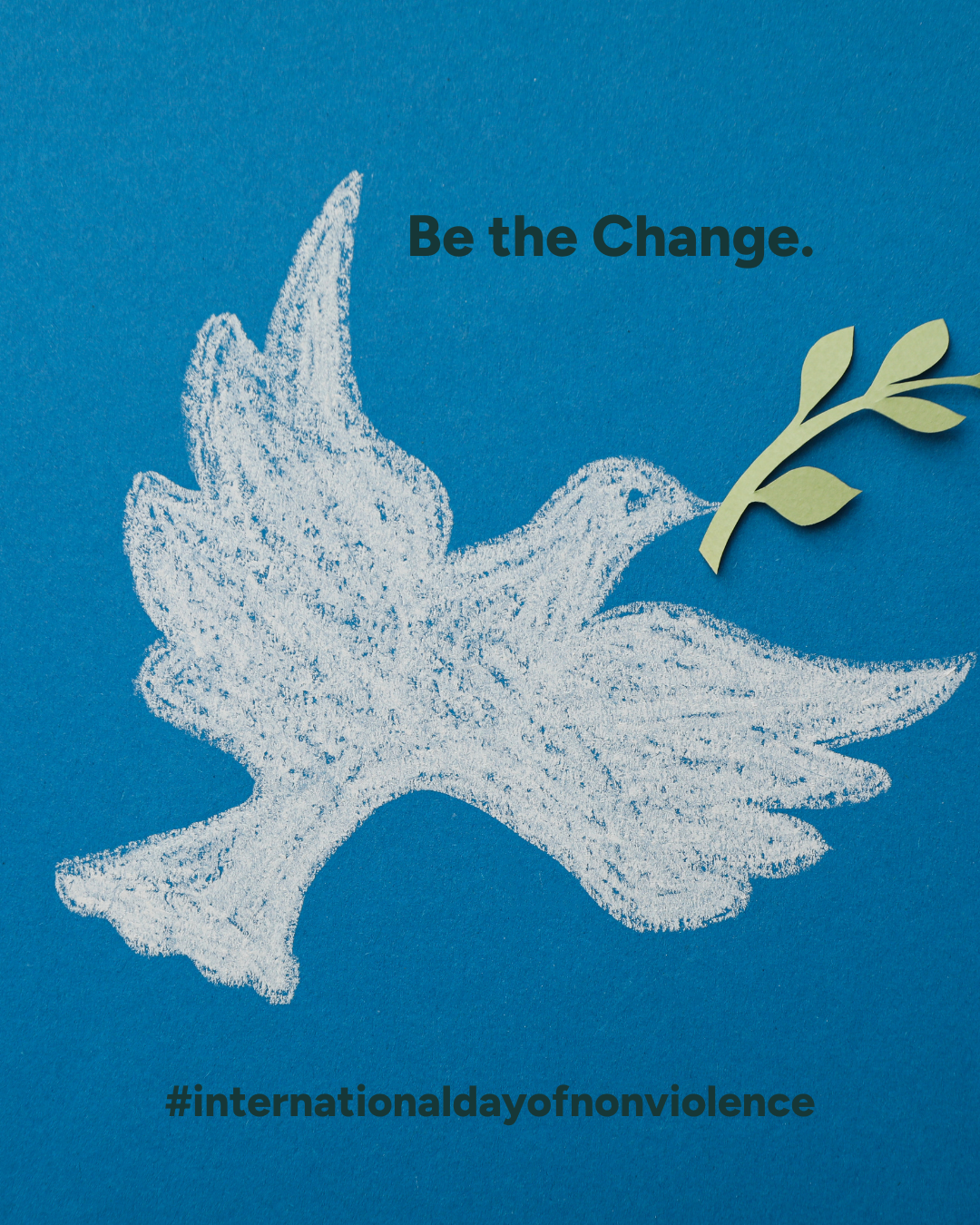
International Day of Non-Violence: Be the Change

It's Time to Stand Up for Peace

The world of tomorrow will be, must be, a society based on non-violence.

- Mahatma Ghandi.

2 October 2025

Today marks the birthday of lawyer, and anti-colonial activist, Mahatma Ghandi, and in honour of his determination to see a violent free world made possible, his birthday now marks the International Day of Non-Violence.

And today, against a global backdrop defined by war, conflict, genocide and a concurrent rise in extremist misogyny, the Loddon Consortium for Gender Equality & Violence Prevention re-news the call for local and international communities and nation-states to prioritise peace, and uphold the universal rights of all human beings to live in safety, with equality and dignity.

One of the greatest challenges facing our time, is the urgent need to create a culture of peace: not just the absence of war and conflict, but an enduring social change agenda that centres equality and respect for all.

We have not yet known peace.

What we have, even at the best of times, is simply the absence of war. The absence of conflict.

But never peace.

We are a society defined by globalisation – built on the back of ongoing colonisation, the forceful and hostile takeovers of lands from indigenous peoples right across the world. The forceful and hostile removal of people from their homes and from their lands to lands far removed from songlines, from bloodlines, from home. And it is from these violences that we have created our legal systems, our justice systems, our ways of governing, and informed our beliefs and our values on who is deserving and who is not.

These systems, these beliefs have contributed to the ongoing oppression and violence experienced by First Nations people, by women and children, people living with disability, folk from diverse, migrant and refugee communities.

These systems, these beliefs have led armies to invade lands far from home; have justified and excused the bombs and bullets and the invasions. They have led to discourse that describes the murder of civilians as ‘casualties’: as though the loss of life was by chance or accident, rather than a deliberate tactic of war.

But even in the absence of war or conflict or genocide, it remains that we live in a world without peace. We live in a socio-economic landscape that upholds extremist male violence, rigid gender stereotypes and prioritises global market economies over people and lands.

It is a world where presidents with sexual violence rap sheets, get re-elected, where women’s bodily autonomy does not exist, even when we’re dead: the rapid repellation of women’s reproductive rights and access to abortions has occurred in countries not at war.

It is a world where our closest allies have laws that make it legal for adult men to marry girl children, and where our political leaders shake hands with Jeffery Epstein’s closest associates and do trade deals with countries who sniper children.

We are witnessing, seemingly overnight, an unprecedented escalation in violence right across the world – no country, nor its people immune.

These violences are happening here on our own doorstep, in our own backyards and in our homes.

The recent racist fueled marches that swept across the streets of Melbourne’s CBD and led to a violent attack on Camp Sovereignty, the fatal attack on two young children making their way home from the bus,  the 50 women who have been murdered since January 2025 – should give us all pause to reflect on how we, as a society continue to condone violence.

The killing of women globally has more than doubled in 2023, than the previous year. Every 10 minutes a woman is murdered. We know that these figures have continued to escalate with Sudan and Palestine reporting extensive ongoing conflict and genocide.[1]

Sexual violence is also on the rise, both here at home and globally. In 2023, UN-verified cases of conflict-related sexual violence soared by 50 per cent: 95 percent of the victims were women and girls, close to have half were perpetrated against children: 98 percent of committed against girl children.

In 2024 Australia recorded an 11% increase in the number of sexual assaults recorded by police. This is the 12th year of increased reporting of sexual assaults and the highest ever in the 31-year history of the Australian Bureau of Statistics.

These are the reported cases. We know that for every recorded case, many more go unrecognised, unrecorded and unreported.

And as we see the bombs drop, entire cities wiped off the map; as we see and hear of harrowing stories of violence coming out of Sudan, and as we receive what seems like almost daily headlines of yet another woman murdered in her home by a person she once trusted, it can be overwhelmingly difficult to maintain hope for a future that is free from violence, where people can live to see gender and social equality.

And yet, it is possible.

Because we are surviving. The change-makers, the peace-makers, the humanitarian workers, the social workers, the social justice protesters, the everyday person making a stand against violence. We outnumber those who seek to do us harm.

And we refuse to go away, refuse to be silenced and refuse to give up hope. Wars, conflicts, oppression and genocide have never managed to silence us.

And while we grapple with meeting the very real and present needs of those most vulnerable in our communities to prevent harm, a harm inflicted more often than not, by the very system in which we operate, we resist.

We fight back.

Not with swords, or bullets or bombs, but instead with determination and a commitment to non-violence, to be the change we seek to see in the world.

Each and every day, we, the change-makers, the peace-makers, the humanitarian workers, the social workers, the social justice protesters and the everyday person making a stand against violence continue to resist and through non-violent action make lasting change. We’ve done it before, we will do it again. And again, and again.

Before 1975, family violence in Australia was not a crime. Similarly, until the 1990s married men were allowed to rape their wives in this country; immune from criminal charges, unless she could prove it was ‘aggravated’. When is rape not a violence?

The much-needed legal reforms that exist today, that recognise family violence and raping your wife as a crime, did not happen in a vacuum and importantly it did not come from the behest of the government: it came from the people. And importantly, it came from the non-violent resistance of the feminist movement of the 1960s and 1970s.

Family and sexual violence services exist in this country because of these trailblazing women. Women and community health centres exist because of these trailblazing women.

And to this day, our feminist principles guide our non-violent resistance and inform our advocacy and dissent.

And while our specialists services work tirelessly to meet the ever-increasing demand, we know that our work is far from over.

Reforms can only take us so far when the system itself is built on oppressive, colonial practices. Each and every year, we face funding cuts, we face legislative reforms that seek to pull back on hard won rights: most notably we see the trickle-down effects of global politics in our states and territories as the race to the bottom of reproductive rights takes wind. We are dismayed at South Australia’s recent consideration of repelling reproductive rights for women to access abortions. It follows fast in the footsteps of hospitals right across Victoria and New South Wales. How long until our dead bodies are also forced to grow the next generation of children? In solidarity with Adriana Smith and her family, we make a stand that no woman should be forcibly kept on life support to maintain a pregnancy. No one should be forced to keep a pregnancy against their will.

Our governments cannot end violence against women in a generation, when that violence is written into its own legislation.

Violence begets violence.

The only way to end violence is through non-violence.

It will take the dismantling oppressive, patriarchal systems, and it will take time.

But time starts today. As it did yesterday and as it will tomorrow.

It’s time to raise our voice, this International Day of Non-Violence. It is time we stand with the peace-makers, the humanitarian workers, the social workers.

It is time to stand with the social justice protestors, with the everyday person making a stand against violence.

It is time to stand with the victim survivors. It is time for us to stand up for those who can no longer stand for themselves – whose lives have been forcibly cut short through violence.

We are stronger together and collectively we can be the change the world needs.

Let us lead with kindness and love – that is the greatest power of all.


[1] UN Women 2024. Global Database on Violence Against Women and Girls. Available from: data.unwomen.org

Sign up to our newsletter.

Receive our latest news, including sector resources and events, and hear how we're supporting our community.

When Home Isn’t Safe: Family Violence and the Increased Risk of Homelessness for Victim Survivors

When Home Isn’t Safe

Family Violence and the Increased Risk of Homelessness for Victim Survivors
27 August 2025

Homelessness Week was a pertinent reminder to listen to the voices of victim survivors of family violence, when calling for state and federal governments to increase investment in social housing.

Family violence is the leading cause of homelessness in Australia; and with soaring rents, low vacancy rates, interest rate rises and housing affordability at an all-time low, we know the situation is only getting harder for women and children seeking safety, wellbeing and a life free from violence.

The choice to stay in a violent relationship, or face homelessness is no choice at all. Yet for people experiencing family violence, it is often one they are forced to make.

Nationally, two in five people facing housing insecurity and requiring specialist housing support were experiencing family violence: 90 per cent of those seeking specialist homelessness support services were women and children.[1]

At CNV, our clients consistently tell us that one of the driving factors that inform their decision-making on whether to leave or stay is the risk of homelessness. In 2023-2024, 40 per cent of CNV clients identified housing as a safety priority.[2]

It is simply unacceptable that our governments have been unwilling to prioritise the investment and legislative needed to keep families in safe and affordable housing.

CNV alone provided 16,944 nights of crisis and emergency accommodation to victim survivors (including children) in 2023-2024. We know that demand is increasing and has significantly outpaced availability of crisis and emergency accommodation.

It is inexcusable that specialist family violence and housing services are forced to turn victim survivors away, including children, from desperately needed housing support, because there is nowhere for them to go.

It is also lamentable that when we speak of ‘crisis accommodation’, what it often means are motel rooms.  With little option but to place those escaping family violence in small, often cramped motel rooms, with little to no access to cooking facilities or any safe spaces for children to play.

Victim survivors require better, and more targeted responses to crisis, emergency and transitional housing. The use of hotels and motels is not a viable, safe or financially sustainable option – and the sector’s over-reliance on the private hotel and motel industry to provide emergency accommodation to some of our most vulnerable community members is simply not appropriate.

Within this context, we must address the gendered drivers of violence against women and girls, children and diverse communities through effective policy and project development.

This requires significant systems change in addressing racism and discrimination. We know that our legal and government systems are not always working towards equality, and to reduce the number of people experiencing or at risk of homelessness, we must begin to dismantle barriers to equality and justice through targeted legislative reform.

We know what is needed to improve safety and give victim survivors a real choice to safely leave a violent relationship. At a minimum, this includes:

  • At least 83,000 new dwellings for victim survivors over the next 25 years in Victoria;
  • Increased investment in specialist family violence and homelessness services;
  • An immediate increase to purpose-built crisis accommodation right across the country;
  • Targeted prevention to reduce the risk of homelessness for people who are more vulnerable to becoming homeless.

We call on all levels of government to address major drivers of homelessness across the population, including racism and discrimination, the adequacy and security of income support, people’s access to affordable housing and importantly safety and wellbeing.

A safe, affordable, and decent home for our clients is the foundation for a safe, nourished life free from family violence. We know that an absence of safe, affordable housing options increases the likelihood of victim survivors remaining with a violent perpetrator.

A choice between facing homelessness or risking a return to the home of the perpetrator is no choice at all.

Every person should have the right to a safe place to call home.

[1] Australian Institute of Health and Welfare. (2025). Specialist homelessness services annual report 2023–24. Retrieved from https://www.aihw.gov.au/reports/homelessness-services/specialist-homelessness-services-annual-report [accessed: 13 August 2025]

[2] Centre for Non-Violence. (2024). Annual Report 2023-2024. Retrieved from https://www.cnv.org.au/about/publications/ [accessed 13 August 2025]

Sign up to our newsletter.

Receive our latest news, including sector resources and events, and hear how we're supporting our community.

Making children visible in the picture of family violence

Making children visible in the picture of family violence

At CNV, we recognise that children are victim survivors of family violence in their own right.
26 August 2025

For far too long, children and young people have been the invisible victims of family violence: their experiences often relegated to the shadows, as silent witnesses. However, there is an urgent need to recognise that children don’t just witness family violence, they experience it too. And their experiences of family violence are unique and require tailored support and protection.

Children are victim survivors in their own right. We know that family violence has significant impacts on children, young people and babies, even before they are born.

The changing paradigm echoes new research and understanding that places children at the forefront of family violence, rather than the periphery. We now understand so much more about the profound impacts of violence on children and young people than we ever have before. Importantly, we know that these impacts extend far beyond the immediate harm, and can include long-term effects on relationships, education, health, and wellbeing.

The most recent crime statistics (2023-2024) for Greater Bendigo show that children were present in 36% of family violence incidents attended by police. Of the 2,589 family violence incidents that police attended, there were children present at 932 of these.  We also note that family violence continues to be significantly unreported, and these figures only represent incidents where police were present.[1]

The signs are often subtle: clinginess in a toddler, aggression in a school-aged child, anxiety in a teen. These behaviours may be misunderstood or dismissed as “just a phase,” but for children experiencing family violence, they are symptoms of deep, invisible wounds. A baby who cannot sleep, a child who lashes out at classmates, a teenager who disengages from school—these are not isolated behavioural issues. They are often desperate expressions of trauma.

Family violence doesn’t only happen in the shadows. Its ripple effects can be found in classrooms, in doctors’ offices, and in playgrounds. The impacts on children are not just emotional or social, they are physical, neurological, and long-lasting. Research shows that trauma from family violence can disrupt brain development and trigger a chronic stress response in children. This can impair their ability to learn, manage emotions, and build healthy relationships, with consequences that can stretch across their lifespan.[2]

Importantly, the presence of family violence in a child’s life doesn’t always look like bruises or shouting. It can be the gnawing tension of unpredictable moods, the absence of a parent too emotionally depleted to engage, or the fear of becoming the next target. A child may be used as a pawn or blamed as a cause. Even if they are not the direct focus of abuse, children absorb its impacts: through missed milestones, illness, self-harm, or risky behaviours. These are not acts of rebellion.

They are calls for help.

ANROWS CEO Tessa Boyd has stated:

“Too often, children and young people’s experiences of violence are invisible in policy and practice. This guide reminds us that they are not just ‘witnesses’ but victims and survivors in their own right. Their voices, strengths, and needs must shape the systems designed to protect them. Ending violence requires us all to commit to policies that are informed by the lived realities of children and young people experiencing violence in their homes.”[3] Yet despite growing evidence, our systems are still catching up. The Victorian Royal Commission into Family Violence revealed that around 80% of child protection cases involve family violence, a figure that is now believed to be even higher. This isn’t just a child protection issue, it’s a community crisis. And it demands that we see children not as secondary victims, but as victim survivors in their own right.

To truly support these children, we must centre their voices and experiences in every aspect of our response. That means going beyond blanket solutions. It requires recognition that children and young people experience unique risk factors.

Dr Georgena Dimopoulos, a leading socio-legal scholar on children’s rights and participation in family law, says “There is no ‘one size fits all’.”[4] A child’s safety isn’t just about locks on doors, it’s about emotional stability, routine, connection, and hope. Children must be given the chance to tell their stories, to identify what makes them feel safe, and to help shape the systems designed to protect them.

What to do – how you can help:

  • Listen – if a child makes a disclosure to you listen to what they are saying.   Hearing a child’s voice is important in supporting them through family violence.
  • Observe/take notes – if you have concerns around a child, take notes of this, document your concerns – this can help if you need to make a report or a referral for a child
  • Act –
  • Partner – even if you’ve made a report or referral for a family, it is important that you continue to provide both the child and their protective parent with support.  This could include, safety planning, emotional support, check ins etc.


[1] Crime Statistics Agency, December 2024, Family Violence Dashboard, https://www.crimestatistics.vic.gov.au/family-violence-data/family-violence-dashboard

[2] Safe and Equal, Supporting children and young people, Retrieved 5 August 2025,

https://safeandequal.org.au/working-in-family-violence/tailored-inclusive-support/children-and-young-people/

[3] Gillfeather-Spetere, S., & Watson, A. (2024). In their own right: Actions to improve children and young people’s safety from domestic, family and sexual violence (ANROWS Insights, 01/2024). ANROWS.

[4] Southern Cross University, August 2024, Victoria’s family violence system is failing children: new report, Retrieved 5 August 2025, https://www.scu.edu.au/news/2024/family-violence-system-in-victoria/

Sign up to our newsletter.

Receive our latest news, including sector resources and events, and hear how we're supporting our community.

Safety, Accountability, and Innovation: CNV’s Journey to Integrated Family Violence Support

Safety, Accountability, and Innovation

CNV’s Journey to Integrated Family Violence Support
25 August 2025

At the heart of CNV’s work is an integrated practice model that brings together teams of professionals to deliver coordinated programs to women, men, children, and young people impacted by family violence. The model ensures a dual focus: prioritising safety for victim survivors, alongside visibility and accountability for people who use violence.

Our integrated teams work collaboratively to assess risk and tailor support using the MARAM framework: Victoria’s best practice model for family violence risk assessment and management. Within each team, specialists share critical information, plan jointly, and provide individualised responses to meet the complex needs of those affected by violence.  

The seeds of this integrated model were sown in 2005 when CNV began delivering men’s behaviour change programs. Around that time, we were considering how integrated responses could support improved outcomes for victim survivors and hold those using violence accountable. We recognised that fragmented services often failed to deliver lasting safety or accountability. This marked the start of a shift towards more connected service responses.

We undertook study tours abroad to explore international best practice. In the US, the Duluth Integrated Model offered valuable insights into coordinated perpetrator interventions. In the Netherlands, we observed a team-based approach where practitioners worked collectively with entire families: victim survivors (adults and children) to deliver coordinated and holistic support and response.   These international learnings inspired us to take bold steps toward full integration.

By 2009, CNV began implementing an integrated model, officially finalising it by 2011-2012. This approach was the first of its kind in Victoria, and possibly Australia. We approached the transition cautiously, due to limitations in information sharing laws and sector concerns, and developed strict protocols to manage safety and risk responsibly. Despite early scepticism, we proved that integrated, accountable, and safe systems could be developed and implemented effectively.

The late Hon. Fiona Richardson MP, then Minister for the Prevention of Family Violence, visited CNV during this period. Deeply impressed, she championed the model as the “gold star” approach to meeting the needs of victim survivors. The Royal Commission into Family Violence heard repeatedly about the need for stronger coordination and integration of systems and recommended the establishment of The Orange Door network: statewide safety and support hubs.  The hubs echo our integrated philosophy by bringing together child and family services, specialist family violence support, Aboriginal services, and child protection.

Today, the integrated practice model continues to reflect our founding vision, and we are continually working to strengthen and improve our approach and impact. The development of the model is a powerful example of what is possible with innovation, collaboration, and a deep commitment to safety and accountability.

Sign up to our newsletter.

Receive our latest news, including sector resources and events, and hear how we're supporting our community.

Working together to prevent violence: the launch of the Loddon Consortium’s Strategic Plan 2025-2028

Working together to prevent violence

The launch of the Loddon Consortium's Strategic Plan 2025-2028
11 June 2025

This Friday, 13 June 2025 the Loddon Consortium for Gender Equality and Violence Prevention (the Consortium) will officially launch its 3-year Strategic Plan, at Mackenzie Quarters in Bendigo. Bringing together staff, partners and stakeholders, the launch will set the scene for how specialist services are working together to deliver better outcomes for rural and regional communities.

The Consortium is a partnership between five specialist gender-based violence organisations across the Loddon area:

  • Centre for Non-Violence (CNV)
  • Annie North Women’s Refuge
  • Centre Against Sexual Assault Central Victoria (CASACV)
  • Women’s Health Loddon Mallee
  • Sunbury and Cobaw Community Health.

The Consortium was established in 2004, bringing together services working in the specialist gendered violence sectors. The partnership is the only Consortium in Victoria that provides integrated regional programs and services for victim survivors of family and sexual violence, men who use violence towards family members, and works to prevent gendered violence. The Consortium is united in its commitment to working and advocating for gender and social equality and a community free of violence.

Some of the key achievements of the Consortium over the last two decades include the innovative development of integrated services for victim survivors of family and sexual violence and men who use violence towards family members. This includes integrated after-hours response programs (family and sexual violence) and shared intake for the Safe, Thriving and Connected therapeutic recovery programs and services for victim survivors, including children.

The Consortium also has representation on key alliances and networks in the Loddon region and statewide, continuously advocating for a specialist family and sexual violence informed policy and legislative decision making. It is the strategic vision of the Consortium’s work that communities, right across the Loddon area, are able to have safe and accessible services to help prevent, respond to and recover from gendered, family and sexual violence, and to ensure that the voices and experiences of regional and rural communities are listened to when decisions are being made at the State and Federal level.

The new strategic plan is the culmination of two decades of learning and leadership of specialist services and brings an even greater focus on the importance of working together to achieve the change we seek to see: everyone in our community has the right to live a life without fear or violence. The Consortium are excited to launch the Strategic Plan 2025-2028 and look forward to setting the scene for another 20 years of successful collaboration, partnership and advocacy.

If you, or someone you know is experiencing family or sexual violence, or you are concerned about your behaviour towards your family, help is available.

In any emergency call: 000

Centre for Non-Violence: (free call) 1800 884 292

Centre Against Sexual Assault Central Victoria: (03) 5441 0431

The Orange Door Loddon: (free call) 1800 512 359

Safe Steps: (24/7 statewide service) 1800 015 188

Sexual Assault Crisis Line (24/7 statewide service) 1800 806 292


END MEDIA RELEASE.

For any media enquiries please contact:

Dr Clare Shamier, Head of Business Development and Advocacy, Centre for Non-Violence:

e). [email protected]

m). 0488 281 528

Our reconciliation journey at CNV

Our reconciliation journey at CNV

Reconciliation is a journey of many steps, taken individually and together each day.
27 May 2025

National Reconciliation Week (NRW) runs from May 27 to June 3 each year. These dates commemorate two significant milestones in the journey to reconciliation: the 1967 Referendum and the High Court Mabo decision. NRW is a time to reflect on the meaning of Reconciliation, acknowledging and understanding our shared histories, cultures and achievements, and respecting our personal and collective roles in the process of achieving Reconciliation.

At CNV, we have been taking small but intentional steps on this path for some time. In 2024, we published our first Innovate Reconciliation Action Plan (RAP), which outlines the next chapter of this journey.

Less than a year since our RAP was launched, some key projects and changes are already well underway. Our internal advisory committee – Ngladurrung Yanagyu – meaning walking together in Djaara language, was established early on to bring staff along the journey. This is crucial to bringing employees up to speed and moving from staff participation to endorsement and ownership.

One of the first actions was amending our Enterprise Bargaining Agreement so employees can opt to work on Invasion Day (January 26). This symbolic change enables staff to take a different day off in lieu, which shifts the focus from a day of celebration, to one of mourning and reflection, 32 staff opted to utilise this provision in the first year it was enacted.

A more long-term focus has been building and nurturing a culture of learning and self-reflection. This is a key part of staff orientation and carries through into ongoing systems, communications and external partnerships. The main focus is to educate staff, encourage self-reflection, and address underlying racism.

An important driver in these changes has been support at all levels of the organisation, with the work very much driven by CNV’s Board of Management. The Board developed and endorsed CNV’s Commitment to First Nations Peoples in May 2023, and are strong advocates for the RAP.

Margaret Augerinos, CEO of CNV, highlights how shifting workplace culture and attitudes is cornerstone in the RAP.

“A RAP is not just in the doing, it’s the changing of organisational culture so that we don’t have to think about these things, so that it’s already embedded in policies and processes,” she says.

Another key focus is building self-determination of Aboriginal and Torres Strait Islander peoples. Wherever possible, we are engaging with First Nations owned businesses, from catering to printing and everything in between. A directory has been established to highlight key opportunities to work with local Aboriginal businesses and suppliers.

CNV participated in the Workplace Reconciliation Barometer (WRB) Survey. A biennial, nation-wide survey that looks at the attitudes towards and perceptions of reconciliation among employees of RAP organisations. Overall, we had positive results and important feedback on how to drive our reconciliation journey. The findings showed our staff’s commitment to participating in truth-telling activities (92%), 100% had participated in a National Reconciliation Event in 2024 and 68% view CNV has genuine and strong commitment towards reconciliation. This has been supported by CNV taking steps to create a more welcoming and culturally safe environment for Aboriginal and Torres Strait Islander peoples, whilst also providing a space that supports staff learning, engagement and capacity building. This includes purchasing maps of First Nations lands and creating acknowledgement of country cards.

Moving forward we will continue to focus on building relationships with external stakeholders who are allies in reconciliation and community. This helps us to listen to and be led by First Nations voices, which is a crucial part of reconciliation. CNV a member of the Bendigo Reconciliation and Allyship Committee and has developed an action plan to drive key actions in the region at an individual, community and organisational level over the next 5 years.

Sign up to our newsletter.

Receive our latest news, including sector resources and events, and hear how we're supporting our community.

Coercive Control: An Endemic Tactic of Family Violence

Coercive Control: An Endemic Tactic of Family Violence

Recent dialogues and media attention have again placed an important spotlight on the dangers and devastating impacts of coercive control.
21 May 2025

This is a welcome opportunity to highlight the importance of understanding, recognising and responding to this insidious and dangerous tactic.

Coercive control is a repeated pattern of abusive, manipulating and intimidating behaviours and almost always underpins the dynamics of family and domestic violence. Perpetrators use coercive and controlling tactics and behaviours most often within intimate partner relationships, with current and former partners and within broader family relationships, including against children and elders.

Coercive control is a largely gendered issue and while people of all genders can perpetrate or experience coercive control, it is overwhelmingly perpetrated by cisgender men against cisgender and transgender women.

Coercive control is a range of deliberate tactics, with perpetrators using subtle, underhanded and manipulative behaviours that directly target victim survivors. These tactics are used in a methodical and deliberate way, and include physical and non-physical behaviours.

These tactics and behaviours may only be recognised and visible to perpetrators and victim survivors: they are often invisible or unnoticed by others. These behaviours intimidate, humiliate and coerce, causing fear, hurt, isolation and limits to victim survivors’ freedom of choice.

Examples of coercive control include gestures, looks, jealousy, social isolation, put downs, threats to harm, financial, legal and systems abuse. You may see or notice subtle changes over time from the impacts of coercive control, with victim survivors having reduced confidence, changing their behaviour, limiting and restricting their movements and activities or isolating themselves from family and friends.

Impacts

Coercive control is serious. It can cause immediate and long-term harm. The impacts often get worse over time and continue after the relationship has ended. Separation and relationship breakdown can be the most dangerous time for victim survivors. Coercive control can impact every part of a person’s life including their mental and physical health, relationships, employment and financial security. The abuse can also impact on a person’s sense of safety, their independence, and self-esteem – making them feel trapped, powerless and alone.

We know coercive control is a defining feature of family violence and is present in most, if not all cases where family violence occurs. For example, of the 2,247 victim survivor risk and safety assessments that CNV conducted between July to December 2024, controlling behaviours were present in 83 per cent of cases. This behaviour, along with intersectional risk factors of perpetrator alcohol and drug misuse, stalking and jealousy are key evidence-based lethality and risk indicators. This is not an isolated issue. Extreme risk was identified in 43 per cent of the victim survivors’ assessments: with 10 or more evidence-based risk factors identified.

Supports

Seeking support and/or leaving an abusive relationship can be difficult and victim survivors may feel like it is impossible to leave due to the risks they are facing. But help is available.

CNV provides specialist integrated support to both victim survivors and perpetrators of family violence.

We assess the safety and risk of victim survivors and perpetrators, to provide responses that uphold safety and accountability and mobilise systems. We work collaboratively to address the needs of our clients.

If you or someone you know is experiencing family violence, contact us for advice and support. Alternatively, if you are supporting someone who is experiencing family violence you can refer them directly to our service.

Reach out for support today

At CNV, we're here to help. You can call, phone or simply drop in.

Reflections from the UN Commission for the Status of Women

Reflections from the UN Commission for the Status of Women

The UN Commission for the Status of Women (CSW) was established in 1946, and is the primary international body dedicated to the promotion of gender equality, and the rights and the empowerment of women.
By Margaret Augerinos, CEO for Centre for Non-Violence

In March this year, I travelled to New York alongside Yvette Jaczina, CNV’s Executive Manager of Programs & Services, where we attended the sixty-ninth session of the UN Commission on the Status of Women (CSW69).

The UN Commission for the Status of Women (CSW) was established in 1946, and is the primary international body dedicated to the promotion of gender equality, and the rights and the empowerment of women. This year, the CSW celebrated a major milestone: the 30th anniversary of the Beijing Declaration and Platform for Action.

The Beijing Declaration is the world’s most comprehensive, visionary plan ever created to achieve the equal rights of all women and girls. Agreed by 189 governments in 1995, at the Fourth World Conference on Women, it centres on 12 areas of action – referred to as “critical areas of concern”. These cover jobs and the economy, political participation, peace, the environment, ending violence against women and more.

It was quite the experience being in New York to celebrate this landmark agreement in a backdrop of some of the most regressive and repressive actions, policies, laws and decisions occurring across the globe.  Whilst we have come a long way, there is still so much more to do in a context where hard fought for rights and gains are easily stripped away.

The CSW events include a large number of sessions and parallel events on a range of topics. We attended a number of sessions over two weeks with a focus on hearing from diverse voices and First Nations people across the globe.

One of these sessions included Maori and Pacific women and girls who shared reflections on the impact of national strategies to address gender-based violence and racism. The presenters discussed how these strategies did little to incorporate the voices of lived and living experience. Other sessions discussed the advocacy for constitutional transformation focused on reconciliation, remediation, restoration and reconstruction and for this to be developed in genuine partnership and co-design representing the ideals defined in the Treaty process.

The UN Secretary-General, Antonio Guterres, proudly spoke of and recognised the importance of feminist activists and civil society. He acknowledged the increasing backlash and misogyny and said we needed to continue to resist and push back against repressive forces.

Part of the trip was spent supporting the ongoing work of the Global Network of Women’s Shelters (GNWS). I participated in the annual GNWS board meeting, attended the GNWS parallel event, several meetings to support advocacy and securing funds for GNWS and was involved in the initial steps to establish the Oceania Network for the GNWS.

Finally, CNV co-presented a parallel session with WESNET and Safe + Equal on how peak organisations contribute to strengthening frontline services addressing gender-based violence. The session explored the role of peak bodies in advocating for political, legislative and social reforms, and increased funding for specialist services. Presenters highlighted how state and national collaboration enhances support for frontline services and the communities they serve, and the importance of partnerships, resources, and advocacy in building effective and sustainable responses to gender-based violence. CNV was able to talk directly to how the WESNET and Safe + Equal had strengthened and supported our work. It was a great session and well received by the audience.

Bendigo candlelight vigil to honour victims of family violence

Bendigo candlelight vigil to honour victims of family violence

The Loddon Consortium for Gender Equality & Violence Prevention (the Consortium) is holding a candlelight vigil on National Domestic Violence Remembrance Day, Wednesday 7 May 2025.
1 May 2025

The vigil will pay tribute to the women and children who have lost their lives to family and domestic violence, and those have experienced or been impacted by it. The vigil will take place in Rosalind Park, adjacent to the Conservatory Gardens (opposite Grill’d), commencing at 6pm. The vigil is open to everyone to attend and is a free event.

National Domestic Violence Remembrance Day is held annually on the first Wednesday of May, as part of Domestic Violence Prevention Month. Vigils are being held across Australia to remember individuals who have died and raise awareness about the impact of family violence.

In 2024, 103 women and 20 children lost their lives to family and domestic violence in Australia. We also recognise that there are those whose lives have been lost to domestic violence who may not yet be known. Their lives matter and we recognise and honour their story.

The vigil is an opportunity to honour and remember these individuals. Attendees will have the opportunity to write a short message acknowledging those who have died, and the courage of all victim survivors.

The Consortium acknowledges the strength and resilience of survivors of family violence. Family violence is a structural and social issue that significantly impacts women and children, families and communities. We recognise the courage of victim survivors, along with the dedicated workers responding to family violence.

Trained staff will be available for anyone who requires further support or needs assistance accessing services.

The Consortium is a partnership of five specialist gender-based violence organisations across the Loddon area:

  • Centre for Non-Violence (CNV)
  • Annie North Women’s Refuge
  • Centre Against Sexual Assault Central Victoria (CASACV)
  • Women’s Health Loddon Mallee
  • Sunbury and Cobaw Community Health.

The Consortium provides integrated regional programs and services for victim survivors of family and sexual violence, men who use violence towards family members, and works to prevent gendered violence.

If you, or someone you know is experiencing family violence, or you are concerned about your behaviour towards your family, help is available.

In any emergency call: 000

Centre for Non-Violence: (free call) 1800 884 292
The Orange Door Loddon: (free call) 1800 512 359
Safe Steps: (24/7 statewide service) 1800 015 188
Centre Against Sexual Assault Central Victoria: (03) 5441 0431

Ends

For all media enquiries, contact Rachel Dale, Media and Communications Lead at CNV via [email protected] or 0488 991 978.

Funding certainty needed to address family violence

Funding certainty needed to address family violence

CNV calls for increased and sustained funding of the family violence sector.
15 April 2025

As Central Victoria’s leading family violence prevention, response and recovery service, the Centre for Non-Violence (CNV) faces ongoing funding uncertainty through time-limited funding for some critical programs and services, and without the required investment needed to respond to all people who require support.

We are already at capacity and simply cannot afford uncertainty.

We are not alone.

Family violence organisations right across the nation have been calling on governments to walk the talk and commit to increased and secured funding for the sector. Specialist family violence organisations like CNV work, often outside of the spotlight, with thousands of individuals each and every year to provide programs and services that directly improve and increase safety. The work we do with victim survivors to increase safety and wellbeing and with perpetrators to take responsibility for their use of violence, works.

We are calling on our Commonwealth leaders to support us to do the work it takes to end violence against women and children.

Our specialised workforce deserve fair and secure pay conditions.  The programs and services that we deliver to our community deserve fair and secure funding to be able to operate at full capacity, and our work in preventing the violence before it begins requires dedicated funding.

We are in a national crisis. Last year a woman was murdered as a result of gender-based violence every four days. 2025 is proving yet again, to be another year where women and children are being murdered in entirely preventable circumstances.

It is not ok that as a frontline service we constantly need to make program decisions based on insecure or inadequate budget conditions rather than on the need. And need for our services has never been greater. We are seeing a marked increase in the number of victim survivors and people who use violence accessing our service. In particular we are seeing greater numbers of children requiring specialist family violence support. We cannot operate in a budget vacuum. Especially when we know that in Australia, the cost of violence against women and their children is estimated at $26 billion a year (Commonwealth of Australia, 2022).

Last year, our staff across the Orange Door Loddon (TOD) and CNV offices provided over 50,000 hours of specialist support for victim survivors. The number of victim survivors that our specialist -family violence staff worked with in TOD increased by almost 10 per cent. Similarly, CNV saw a distinct increase in the number of direct referrals to our service with over 2,400 victim survivors accessing much needed support. Not only are we seeing a rise in the number of people seeking support, we are also seeing a rise in the number of complex and high-risk cases requiring intensive management. By way of example, of the 3520 MARAM assessments (how specialist services and police assess family violence risk) we conducted this year, 27 per cent of victim survivors had 10 or more lethality indicators. When someone has five or more, they are considered to be at imminent risk of lethality or serious harm.

We cannot afford to turn people away from much needed specialist family violence support.

While we have wholeheartedly welcomed the Federal Government’s commitment to ending violence against women and children through the National Plan to End Violence against Women and Children 2022-2032, the most recent budget hand down has failed to bring the family and sexual violence sector out of crisis mode.

The National Plan identified that one of the key pillars to achieve generational change was to strengthen the capacity of specialist family, domestic and sexual violence services (Commonwealth of Australia, 2022). However, without significant, and ongoing funding to the specialist sector, the National Plan has no way of achieving this objective.

Each and every year, the sector faces extraordinary uncertainty in budget allocation all while each and every year, the demand for our services increases. In the Loddon Region alone, we are seeing a significant spike in the number of family violence incidents.  We know that these figures are reflected right across the states and territories.

It is a confronting message to not only the sector but also to the community, that the lives of women, children and diverse communities – who are at the highest risk of harm from family violence – are further jeopardised by line items on a budget.  We need to be adequately resourced to do our job, because without us, there is no safety net in place for the thousands of victim survivors that walk through our doors every year.

An investment in the family violence sector is an investment towards a future society that is free from gendered violence.

For further information:

Dr Clare Shamier
Head of Business Development and Advocacy
e: [email protected]
m: 0488 281 528

For general media enquiries:

e: [email protected]